

Image: ln24SA
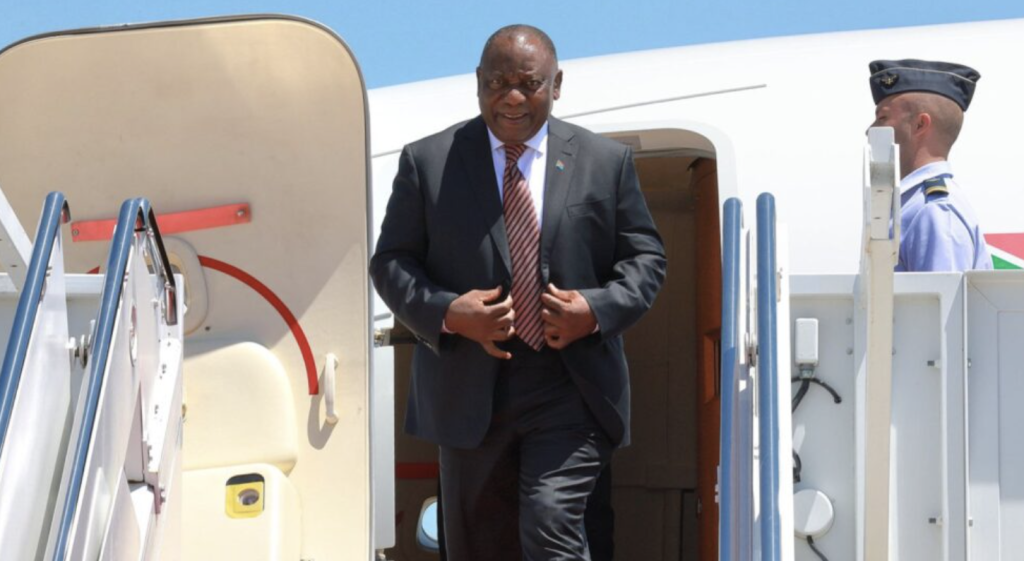
South African President Cyril Ramaphosa is heading to Washington on a high-stakes diplomatic visit aimed at easing tensions with U.S. President Donald Trump. Ramaphosa hopes to redirect the relationship towards trade and investment cooperation, despite the sharp criticism South Africa has faced from Trump since the beginning of his second term.
Trump has been openly critical of South Africa’s land reform policies and its legal action against Israel, leading to strained relations. His administration has cut aid to South Africa, expelled its ambassador, and welcomed asylum claims from white South Africans, citing what he says is racial discrimination—allegations South Africa firmly denies.
“We may not always agree, but dialogue is essential,” Ramaphosa said on national television before departing for the U.S. The United States remains South Africa’s second-largest trading partner after China, and the reduction in aid has already negatively impacted health initiatives, including HIV testing programs.
To help smooth discussions, Ramaphosa is bringing a delegation that includes government ministers, prominent businessman Johann Rupert, and celebrated golfers Ernie Els and Retief Goosen. The meeting with Trump is scheduled for 15:30 GMT.
On the American side, Vice President JD Vance, tech entrepreneur Elon Musk—who has criticized Ramaphosa’s policies—and senior officials will be present. Musk, who was born in South Africa, has accused the government of targeting white citizens, a claim Ramaphosa disputes.
There has been speculation in South Africa about the potential for a heated exchange, reminiscent of Trump’s recent confrontation with Ukrainian President Volodymyr Zelenskiy. However, Ramaphosa’s team has played down those fears, pointing out that the leaders and circumstances are very different.
Business and Golf Diplomacy
Reports in South African media suggest that Rupert, the luxury goods magnate behind brands like Cartier, played a key role in arranging the meeting. Els, a four-time major golf champion, also reportedly helped, due to his existing ties with Trump from past rounds of golf. Neither has publicly commented.
Ramaphosa plans to present Trump with an offer for expanded trade ties, including a proposal for Tesla electric vehicles to be granted duty-free access to the South African market, in exchange for Tesla building charging stations locally. He’s also expected to discuss licensing for Starlink, Musk’s satellite internet firm.
Agriculture Minister John Steenhuisen, part of Ramaphosa’s delegation, is advocating for continued access to U.S. markets under the African Growth and Opportunity Act (AGOA). This trade program is currently under review and could subject South African goods to a 30% tariff if changes are enacted.
Trump, meanwhile, is likely to push back on South Africa’s equity and hiring requirements aimed at economic inclusion. These laws mandate that companies, especially in key sectors like mining and telecommunications, allocate a portion of ownership to historically disadvantaged South Africans.
Ramaphosa is not expected to compromise on these points, which are central to his administration’s mission to address economic disparities left by apartheid and colonial rule.
Historical Tensions Underscore Diplomatic Challenge
Analysts warn that the root of the diplomatic rift runs deeper than trade. Trump has accused the South African government of enabling violence against white farmers and pursuing policies that disadvantage them. South African officials reject these accusations, arguing that they ignore the country’s complex and painful past.
Crime statistics do not support claims that white citizens are disproportionately targeted. Land reform laws in South Africa include legal protections, and any property seizure must go through the courts and serve the public interest. So far, no land has been forcibly taken.
Despite being a minority, white South Africans still hold a dominant share of the country’s wealth and land. They own around 75% of private farmland while comprising only 7% of the population.
Ramaphosa, who played a key role in the negotiations that ended apartheid and later built a successful investment firm, is relying on his negotiation skills to try to reset the tone of the U.S.-South Africa relationship.
Get the latests of our Loveworld News from our Johannesburg Stations and News Station South Africa, LN24 International