

Image: ln24SA
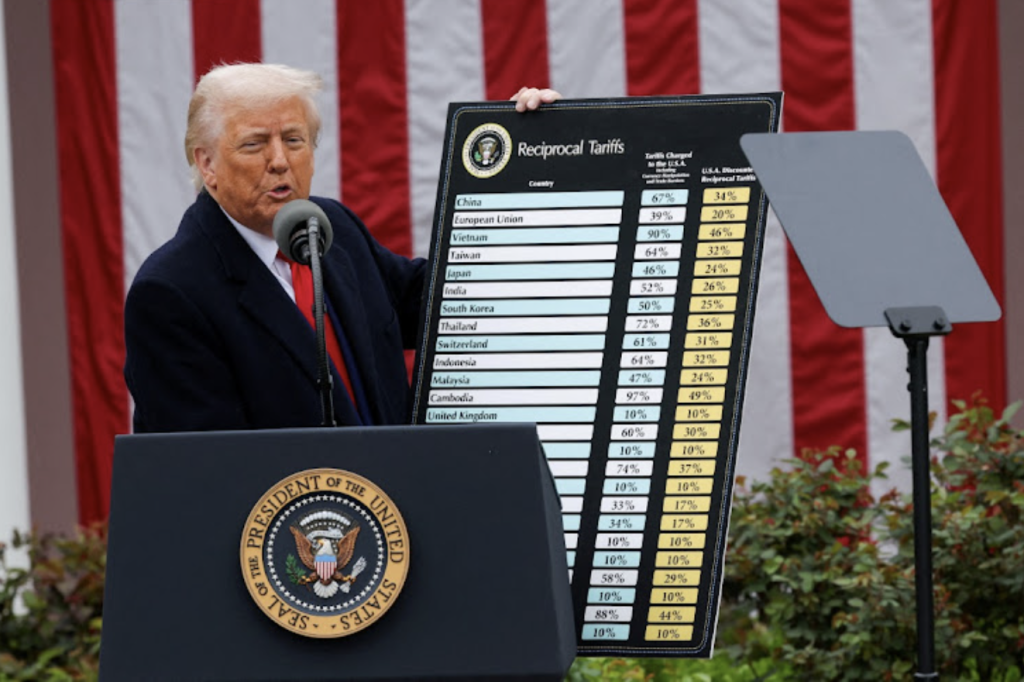
A U.S. trade court has struck down the majority of tariffs imposed under President Donald Trump, ruling that he exceeded his legal authority. The decision brought some temporary relief to financial markets, but also introduced fresh uncertainty into the global trade landscape.
While the ruling was welcomed by some investors, key American trading partners remained cautious. Germany and the European Commission both declined to comment, citing the ongoing nature of the legal process. A German economy ministry spokesperson expressed hope that negotiations between the EU and the U.S. could still lead to a balanced outcome.
The United Kingdom described the decision as an internal matter for the U.S., noting that it marks only the beginning of what could be a lengthy legal battle.
The market reaction was initially positive. Sectors like semiconductors, banks, luxury goods, and the automotive industry—which had previously taken a hit from trade tensions—saw a boost. However, optimism was tempered as uncertainty about the administration’s next steps lingered. After an early rally, the U.S. dollar lost momentum, and gains in stock futures softened.
Wednesday’s court decision dealt a significant blow to Trump’s tariff-based trade approach, particularly targeting sweeping duties imposed under the International Emergency Economic Powers Act. The ruling doesn’t affect more targeted measures like those on steel, aluminum, or automobiles.
The Trump administration stated it would appeal, but analysts believe investors will stay cautious as legal options are explored. If the decision stands, it could limit the president’s ability to use blanket tariffs, although other trade laws might still allow more narrowly targeted actions.
After market backlash earlier in the year, Trump had paused some of the duties and promised bilateral deals. So far, only the U.K. has reached an agreement. The court’s intervention may give other countries reason to hold off on negotiations.
Analysts believe the delay could benefit opponents of broad tariffs and provide traders with time to adapt. “If the appeal doesn’t go through quickly, the immediate benefit is time—and a limit on how wide and high tariffs can go for now,” said George Lagarias, chief economist at Forvis Mazars.
Ongoing Trade Disruptions
Trump’s tariff strategy has had widespread effects, impacting industries from luxury fashion to auto manufacturing. Rising material costs and supply chain disruptions have forced companies to revise or abandon financial forecasts.
Major brands such as Diageo, GM, and Ford have pulled back from issuing annual guidance. International firms like Honda, Campari, Roche, and Novartis have also considered shifting or expanding their U.S. operations in response to trade pressures.
As markets digested the implications of the ruling, European sectors sensitive to exports—such as autos and luxury goods—saw early gains. France’s CAC 40 rose thanks to its strong presence in these sectors, while broader European indices also moved modestly higher.
Some of the positive market sentiment was supported by strong earnings from Nvidia, a leading player in the artificial intelligence space. Still, analysts warned the optimism might be short-lived.
“We’re likely entering a period of heightened volatility,” said Kevin Barker, head of active equities at UBS Asset Management. “There will be more market swings ahead—but that can create opportunities for active investors.”
Get the latests of our Loveworld News from our Johannesburg Stations and News Station South Africa, LN24 International