

Image: ln24SA
Hamas is pushing for changes to the most recent proposal for a ceasefire in Gaza, according to a senior figure from the group. However, a U.S. official dismissed the response as “totally unacceptable.”
This latest disagreement comes as the conflict nears 20 months, with conditions in Gaza worsening. Food shortages and the emotional toll on families of hostages and victims are intensifying the urgency of a resolution.
The Hamas official, who declined to be named due to the sensitivity of the negotiations, said their proposed changes revolve around assurances from the U.S., timelines for releasing hostages, the entry of humanitarian aid, and the pullout of Israeli forces. Specifics were not provided.
A separate statement from Hamas outlined goals of achieving a lasting ceasefire, full withdrawal of Israeli troops, and consistent delivery of aid. As part of a proposed exchange, the group would release 10 living hostages and the remains of 18 others in return for a set number of Palestinian detainees. According to Israeli estimates, 58 hostages remain in Gaza, with 35 believed to be deceased.
The U.S. envoy described the current framework as offering a 60-day ceasefire, during which half of the surviving hostages and half of the deceased would be returned. He encouraged Hamas to accept this as a foundation for further talks, which could begin within days.
Israeli leaders have approved the temporary truce framework, and the U.S. president has stated that negotiations are nearing an agreement.
Meanwhile, another senior Hamas figure accused Israel of backtracking on prior commitments and criticized the mediation process as being biased.
“We just want the bloodshed to stop,” said Motasim, a resident of central Gaza’s Al-Bureij refugee camp. “We’re exhausted.”
Humanitarian Crisis Deepens
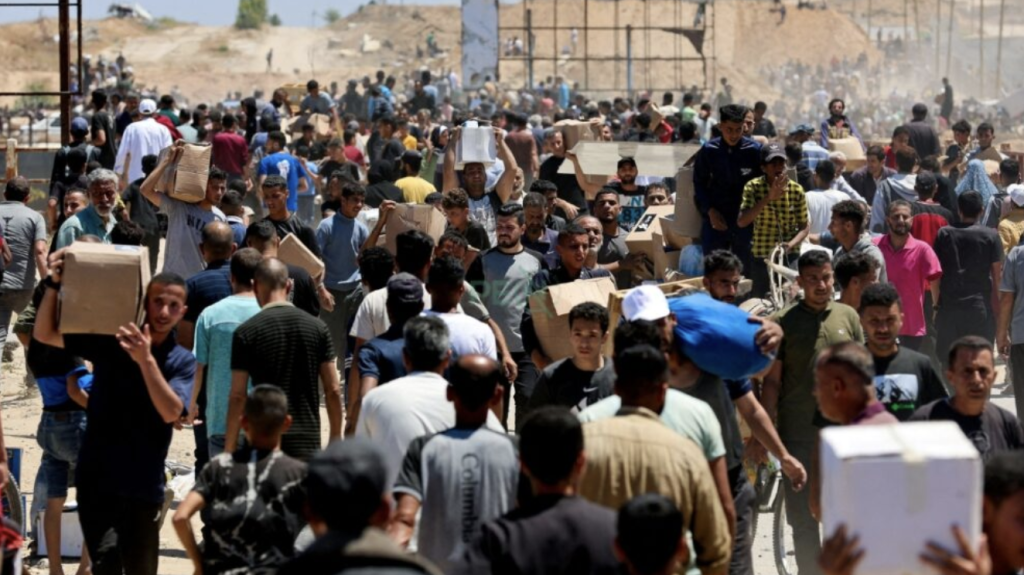
On the ground, the humanitarian situation is dire. Dozens of food trucks carrying aid into Gaza were intercepted and stripped of supplies by crowds of hungry civilians. Aid officials reported that 77 trucks, primarily carrying flour, were emptied before they reached distribution points.
One eyewitness in the southern city of Khan Younis described how residents set up roadblocks to stop a convoy, overwhelmed by the sheer desperation caused by a prolonged blockade.
The nearly three-month restriction on aid has brought Gaza’s more than two million people to the edge of famine. While some aid has entered recently, relief agencies say it falls far short of what’s needed.
Officials overseeing aid coordination on the Israeli side stated that nearly 580 trucks entered Gaza over the past week. That’s still far below the roughly 600 trucks per day that were crossing during an earlier ceasefire, before renewed military actions resumed.
Aid organizations warn of extreme hunger. One group said it has enough food for two months—over 140,000 metric tons—ready for delivery, but stressed the need for immediate, large-scale distribution to stabilize the situation.
Security concerns are further complicating aid efforts. Recently, relief groups were forced to use unsafe routes through conflict-prone zones in Rafah and Khan Younis, where vehicles have been stopped by armed groups.
Looting and New Aid Mechanism Create Tension
Internal communications among aid agencies revealed several incidents of looting within just a few days, not including more recent events. Ongoing fighting has made consistent deliveries nearly impossible.
A new aid initiative, established with U.S. and Israeli support, began operating this week. The program, known as the Gaza Humanitarian Foundation, has started distributing food through multiple sites under challenging conditions.
Officials backing the program say it is designed to eventually take over the distribution of aid from international organizations. They argue that the change is necessary due to claims that Hamas has been diverting supplies—a charge that aid agencies firmly deny.
The new initiative employs armed contractors to ensure secure distribution, a move that has drawn criticism from humanitarian groups who warn this approach is militarizing aid delivery. On Saturday, the foundation reported distributing 30 truckloads of food, calling it their largest effort to date.
Get the latests of our Loveworld News from our Johannesburg Stations and News Station South Africa, LN24 International