

Image: ln24SA
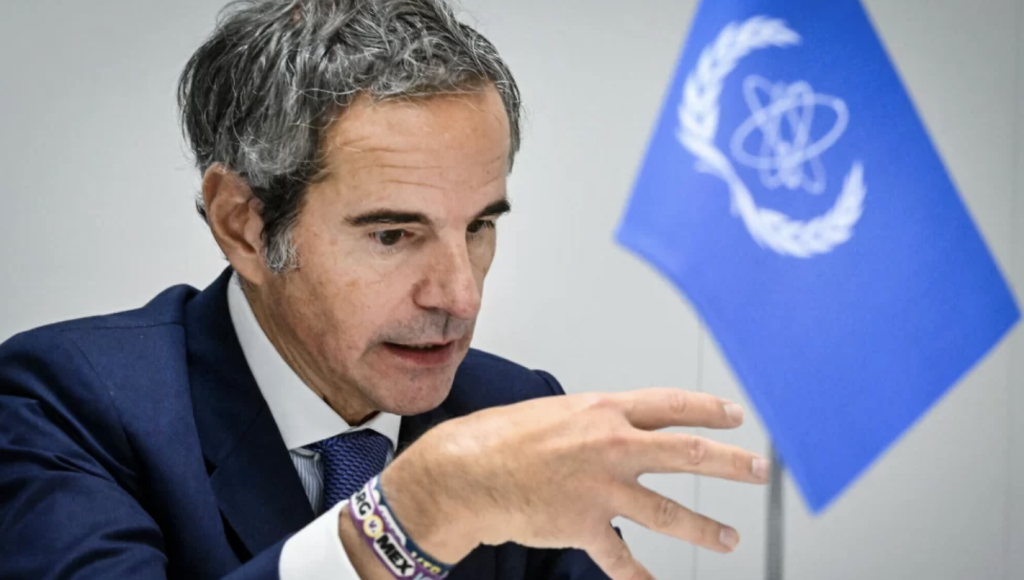
The United Nations’ nuclear monitoring body declared on Thursday that Iran has violated its commitments under the global nuclear non-proliferation agreement. In response, Iranian officials announced a series of retaliatory steps and claimed a “friendly” nation had warned them of a potential Israeli military strike.
Meanwhile, a sixth round of discussions between U.S. and Iranian officials on Iran’s advancing uranium enrichment efforts is set to take place in Oman this Sunday, according to that country’s foreign minister.
Tensions are rising after U.S. President Donald Trump stated on Wednesday that American personnel were being relocated from the region due to heightened security risks, stressing that Iran would not be permitted to acquire a nuclear weapon. This move comes at a fragile time in the Middle East, already on edge due to the aftermath of the conflict between Israel and Hamas that began in October 2023.
President Trump has warned of potential military action against Iran if talks stall, and recently expressed skepticism over whether Tehran will halt its enrichment efforts. Iran continues to demand the removal of U.S. sanctions, which were reimposed after Washington withdrew from the 2015 nuclear accord in 2018.
This marks the first time in nearly two decades that the UN nuclear agency’s governing board has formally found Iran in breach, potentially opening the door for the issue to be referred to the UN Security Council. The decision follows a series of disputes with the agency since the collapse of the nuclear agreement.
An official from the agency stated that Iran has responded by indicating plans to launch a third uranium enrichment facility, though it has not yet provided key information such as its location, which is necessary for international inspections.
Following the announcement, Israel’s Foreign Ministry condemned Iran’s actions, saying they threaten regional and international peace by undermining the Nuclear Non-Proliferation Treaty (NPT). Iran is a signatory to the treaty, while Israel is not, although it is widely believed to possess nuclear weapons.
Market and Regional Reaction
Financial markets reacted to the developments with some volatility. Oil prices briefly rose after President Trump’s remarks but later stabilized. Stocks of European airlines, travel firms, and hotel groups dropped amid concerns that rising tensions could hurt tourism and raise fuel costs.
Analysts expressed concern about the risk of military conflict. “Iran is clearly at the center of this. If it comes to airstrikes from either the U.S. or Israel, the situation could deteriorate rapidly,” one investment strategist noted.
Despite the rising tensions, foreign energy companies continued operations in southern Iraq, and Emirates airline reported no changes to its flight routes, though it is monitoring developments closely.
According to Iranian state media, Tehran’s response includes several countermeasures. These include upgrading the centrifuges at its Fordow enrichment site from first- to sixth-generation models, which would significantly increase its uranium output.
Uranium enrichment has both civilian and military applications. While Iran insists its nuclear program is peaceful, more refined uranium can be used in nuclear weapons.
Reaffirming its right to enrichment under the NPT, a senior Iranian official said the regional turmoil is meant to pressure Tehran into compromising on its nuclear rights.
Possible Israeli Attack
The same official revealed that a friendly nation had warned Iran of a possible Israeli strike on its nuclear infrastructure. While Iran still favors diplomacy, its military is prepared to respond if attacked.
Iranian state outlets reported that the country’s armed forces had accelerated planned drills to prepare for any hostile actions. The commander of Iran’s Revolutionary Guards stated that any future retaliation would be more intense than previous responses.
This follows last year’s direct exchange of missile attacks between Iran and Israel, triggered by the bombing of the Iranian consulate in Damascus and resulting Iranian retaliation.
Reports also indicate that senior Israeli officials, including the Mossad chief and a government minister, are heading to Oman for meetings with the U.S. Special Envoy. The discussions aim to clarify Israel’s position ahead of the upcoming U.S.-Iran talks.
Get the latests of our Loveworld News from our Johannesburg Stations and News Station South Africa, LN24 International