

Image: ln24SA
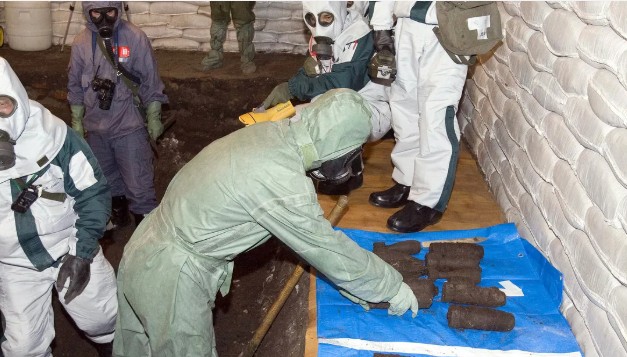
China has once again urged Japan to accelerate the disposal of abandoned chemical weapons (ACWs) left on Chinese soil during World War II, highlighting the persistent threat these deadly remnants pose to public safety and the environment. The renewed call comes as Wednesday marked 26 years since both nations signed a crucial Memorandum of Understanding (MOU) on the issue, a testament to the long and arduous process of addressing this historical burden.
Foreign Ministry spokesman Guo Jiakun emphasized Beijing’s concerns, stating that despite significant efforts, the destruction of these weapons is lagging behind schedule. He noted that while over 16,000 such weapons have been recovered, the pace of destruction is insufficient to mitigate the ongoing risks. Guo’s remarks underscore China’s insistence that Japan fulfill its historical responsibilities and intensify its efforts to complete this critical task. This article will delve into the historical context of these abandoned weapons, the progress and challenges of the disposal efforts, and the ongoing diplomatic pressure from Beijing.
A Legacy of War: Japanese Chemical Weapons in China
During World War II, the Imperial Japanese Army extensively used chemical weapons, particularly in China, as part of its aggressive military campaigns. These weapons, ranging from mustard gas to lewisite, were deployed in various battles and experiments, leaving behind a deadly legacy that continues to plague Chinese soil decades after the war’s end. The use of such inhumane weapons was a clear violation of international law, and their abandonment has created a unique and dangerous environmental and public health crisis.
Following Japan’s surrender in 1945, a significant quantity of these chemical weapons was left behind in China. The sheer volume and scattered nature of these abandoned weapons make their identification, recovery, and destruction an immense and complex undertaking. Many were buried hastily or dumped in remote areas, often without proper records, making their discovery accidental and dangerous. Over the years, incidents of exposure to these weapons have resulted in injuries and even fatalities among Chinese citizens, underscoring the persistent threat they pose.
This historical context is crucial to understanding the urgency of China’s demands. For Beijing, the disposal of these weapons is not merely an environmental or safety issue; it is a matter of historical justice and a lingering wound from a brutal past. The continued presence of these weapons serves as a tangible reminder of the atrocities committed during the war and the need for Japan to fully address its wartime responsibilities.
Get the latests of our Loveworld News from our Johannesburg Stations and News Station South Africa, LN24 International