

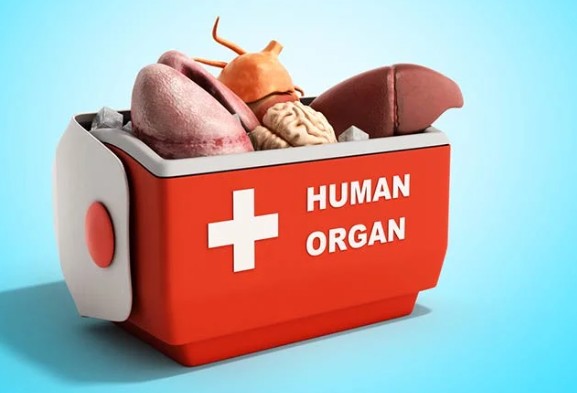
Image: ln24SA
The Transplantation Society, known as TTS, presents itself as a humanitarian alliance of medical professionals dedicated to advancing the science and ethics of organ transplantation. It was founded in 1966, and operates from Montreal, Canada but exerts influence that is far beyond its modest headquarters. However, far from being an entity dedicated to humanitarian causes, the transplantation society appears more to be an actor lurking in the shadows of medical corruption, seeing how it sets global precedents for medical discrimination based on vaccination status. Today, we ought then to discuss in detail what the transplantation society is, and what has been the markers of their influence in health policy.
HE TRANSPLANTATION SOCIETY: AN ACTOR LURKING IN THE SHADOWS OF MEDICAL CORRUPTION
Looking at the Transplantation Society, as an actor lurking in the shadows of medical corruption. To begin with, we ought to look at what exactly is the Transplantation Society. And once again, the Transplantation Society, presents itself as a humanitarian alliance of medical professionals dedicated to advancing the science and ethics of organ transplantation. It was founded in 1966, it operates from Montreal but exerts influence far beyond its modest headquarters, functioning as the central nervous system of global transplantation policy. Meanwhile, its mission, on paper, seems noble: as they state that they exist to spread clinical expertise, to promote fair organ allocation, and to raise ethical standards in donation practices. YET the structure and relationships that sustain the organisation tell a more intricate story; and one where medicine, politics, and economics literally interlock around a single institution.
Additionally, at the top of TTS sits a governing council of presidents, treasurers, and regional representatives, formally tasked with setting global policy. Around that nucleus spreads a web of committees devoted to research, education, and ethics. Those groups feed into the society’s two primary platforms of influence: its scientific journal (called Transplantation) and its World Congresses, where professional guidance often becomes de facto international policy.
Then, beneath the pleasant fiction of open deliberation also lies a concentrated form of authority. And here, a handful of senior surgeons and bioethicists; mostly Western, draft guidelines that ministries of health later adopt wholesale. TTS then issues so-called “recommendations.” But, because it holds consultative status with the World Health Organization, those so-called recommendations are actually promptly incorporated into the WHO’s declarations and then disseminated to hospitals as hospital policy. And so, what begins as advice in a conference hall can soon determine who receives a heart, kidney, or liver on the other side of the planet.
And so, ultimately, the Transplantation Society functions much like a modern scientific guild; an exclusive, self‑governing body that defines legitimacy, enforces orthodoxy, and safeguards the privileges of its members under the banner of ethics. Its council and committees act as gatekeepers, determining which research is deemed credible, who may participate in professional circles, and what qualifies as “ethical” medical practice. Through its partnerships with institutions such as the World Health Organization and major pharmaceutical sponsors, it has been able to exert soft authority that resembles a guild’s monopoly power, controlling access to professional recognition, funding, and even policy influence. And, of course, like guilds of old that combined moral mission with economic protectionism, TTS blends humanitarian rhetoric with structural self‑interest, ensuring that dissenting voices are marginalized while institutional consensus is enforced. In essence, it operates less as an open scientific association and more as a closed order of credentialed so-called elites managing global transplantation as both a craft and a domain of influence.
Now, just give insight into what this looks like in a real world setting, and emphasising how it affects the livelihood of people, I’d like (once again) to reference a point stated earlier, which is that the TTS holds consultative status with the World Health Organization, which has meant that their so-called recommendations are promptly incorporated into the WHO’s declarations and then disseminated to hospitals as hospital policy – which means that, what begins as advice in a conference hall can soon determine who receives a heart, kidney, or liver on the other side of the planet. Well, I think the world saw this in play when, in February 2025, Cincinnati Children’s Hospital denied a child a heart transplant because she was NOT vaccinated for covid due to religious beliefs.
THE TRANSPLANTATION SOCIETY’S INFLUENCE ON COVID POLICIES
Now, just in case it seems like a stretch to assume that the hospital policy of children’s hospital in Cincinnati has anything to do with the TTS, I’d like to zero in further on the TTS’s actions during the COVID era. So, during the COVID‑19 era, the Transplantation Society assumed an unusually activist role, crafting and promoting global transplant policies that extended well beyond scientific guidance into behavioral enforcement.
Notably, it urged transplant centers to prioritize vaccination as a prerequisite for both recipients and living donors, describing compliance as an ethical duty rather than a personal choice. And that language, which mixed medical caution with moral obligation, quickly translated into hospital protocols that removed unvaccinated patients from transplant waiting lists! And not only this, but the TTS further advised that transplant programs could be suspended or postponed during outbreaks, that donors who test positive for SARS‑CoV‑2 be excluded, and that clinical staff adhere to strict immunisation mandates themselves. And so, I believe at this point, the Cincinnati Children’s Hospital incident is probably looking more and more like a manifestation of a universal problem than an isolated issue.
In anycase, although these measures were presented as safeguards for immunosuppressed patients, they effectively created a regime of medical conditionality, in which access to life‑saving surgery hinged on conformity with public‑health directives. And by defining vaccination as an “ethical prerequisite,” the TTS transformed voluntary compliance into institutional coercion, thereby legitimizing discriminatory policies that lacked long-term outcome data and ignored emerging evidence of the limited efficacy of vaccines in immunosuppressed individuals.
Furthermore, the emerging evidence of vaccine-related cardiac damage was ignored by the TTS, which ended up forcing many patients with cardiac disease to get vaccinated despite ample evidence indicating it could worsen their condition. But, through its networked influence with regional transplant bodies and the WHO, the TTS ensured that these standards were adopted globally, embedding pandemic control measures into the fabric of organ‑transplant ethics itself (and we will address in a moment why this is concerning in light of the already poor ethics in the organ transplantation industry).
But, to demonstrate how global this influence of the TTS was, there are numerous individuals in Australia (not just America) who were denied an organ transplant because they did not meet vaccination requirements. In more detail, during the height of the COVID-19 pandemic in 2021–2022, certain Australian hospitals and transplant programs imposed requirements for COVID-19 vaccination among patients awaiting organ transplants. In Queensland, health authorities mandated a minimum of two doses of an approved vaccine for eligibility in kidney, lung, or heart transplant procedures.
Similar considerations applied in other states, such as New South Wales, where hospitals like St Vincent’s cited vaccination status as a key factor in assessing transplant viability, arguing that proceeding without it could endanger the patient, waste a scarce donor organ, or pose risks to healthcare staff and others. The Transplantation Society of Australia and New Zealand (TSANZ) noted vaccination as one of multiple medical factors in decision-making, aligning with international practices where stewardship of limited organs prioritized candidates with better predicted survival.
These policies were thus coercive, effectively presenting patients with a stark choice: between vaccinating or facing indefinite delays on waitlists, EVEN when COVID-19 posed minimal community threat. As such, some patients expressed feeling “backed into a corner,” fearing vaccine side effects amid their vulnerable health states. Meanwhile, reports also emerged of specialists dismissing concerns, including references to Pfizer’s clinical documents or safety data, because the specialist were prioritising compliance over individual inquiries.
FOLLOWING THE MONEY: HOW THE TRANSPLANTATION SOCIETY’S FUNDING MODEL BENEFITS PHARMAKEIA
Let’s also follow the money, because as with many (if not all) organisations and developments, when you follow the money, you understand better where control lies. Well, in light of the money trail, the Transplantation Society relies on a funding model that blends membership dues with substantial sponsorships from the pharmaceutical industry. Major companies producing anti-rejection medications, immunosuppressants, and advanced biological therapies – and these are pharmaceutical companies such as Roche, Novartis, Astellas, and several others – and they provide financial support to the TTS.
These financial contributions primarily underwrite the TTS’s international congresses, educational programs, research grants, and various outreach initiatives.This partnership thus grants pharmaceutical firms significant influence over the direction of transplant medicine. And by funding high-profile events and so-called continuing medical education, the pharmaceutical companies ensure that their products, clinical priorities, and research agendas remain central to scientific discussions, guideline development, and professional training. In fact, presentations at the TTS congresses are said to often highlight data favourable to sponsored therapies, while alternative approaches or critical perspectives on long-term immunosuppression risks may receive less emphasis.
Additionally, the financial arrangement affords the TTS extraordinary global reach and organizational capacity. With industry backing, the TTS can convene thousands of specialists, publish influential journals, shape international guidelines, and coordinate registries that inform transplant policy worldwide – which as we’ve established, is a concerning thing seeing as their policies have empowered hospitals to deny people transplants on the basis of vaccination status.
But, despite the global reach of the TTS, this financial dependence on pharmaceutical companies has also inevitably eroded institutional independence. This is to say that although TTS is registered as a nonprofit scientific body, its operations more closely resemble a sophisticated clearinghouse for global transplant governance than a traditional charity focused solely on patient welfare or public health advocacy. And you see when considering that decision-making about conference content, educational priorities, and even ethical statements often reflects the interests of corporate patrons. And so, these entrenched industry ties have promoted the prioritisation of commercial goals – such as advocating for expanded lifelong drug regimens and higher procedure volumes.
But, in all honesty, this is not new at all. Any allegedly independent health body or society, is often funded by pharmaceutical corporations and ends up churning out information in favour of said pharmaceutical entities, RATHER than advocating for the best interests of its focus group. In fact, you’d recall that we discussed this in light of the American Medical Association, and the American Academy of Paediatric’s here on The War Room, proving that this financial conflict of interest has become ubiquitous among medical academies and societies.
THE TRANSPLANTATION SOCIETY’S STANDARDS CONTRIBUTE TO ALREADY POOR ETHICS IN ORGAN TRANSPLANTATION
Now, we discussed earlier that through its networked influence with regional transplant bodies and the WHO, the TTS ensured that its COVID policy standards were adopted globally, embedding pandemic control measures into the fabric of organ‑transplant ethics, and I then flagged that we would address why this is concerning in light of the already poor ethics in the organ transplantation industry – and this is where we zero in on that.
We’ve discussed here on The War Room, the fact that the diabolical definition of brain death evolved in the mid-20th century (in part) due to technological advances in critical care, BUT also due to the need for organ transplantation – and so, for the purpose of this discussion, we ought to look further into this intersection between brain death and organ donation and transplantation.
So, organ donation is frequently portrayed in mainstream media as an unequivocally noble act, emphasizing stories of one individual’s selfless sacrifice saving multiple lives. This narrative frames it as a classic utilitarian triumph: the greatest good for the greatest number, where one death enables many to survive. BUT, this optimistic view actually obscures a profound ethical and medical controversy, which is that for organs to remain viable for transplantation, they must be harvested while still perfused with oxygenated blood, thus requiring the donor to be alive. As such, this requires the donor to be biologically alive – despite being labeled “brain dead.”
This is in part why the term “brain death” is highly controversial, as it literally allows organ removal from patients whose hearts are still beating. In effect, the act of organ removal becomes the cause of true biological death, because the person would otherwise be alive if their organs were left intact, especially since bodily processes like homeostasis, hormone regulation, and even gestation in pregnant women can persist despite so-called brain death. And so, in light of this controversy, many are calling organ harvesting a ritual: a ceremonial determination of death preceding a sacrificial extraction, all under the guise of medical necessity.
HOW BRIAN DEATH INFLUENCED THE COMMODIFICATION OF ORGANS
So, let’s also follow the money. In essence, given how limited viable donor organs are, transplants rapidly became an incredibly valuable commodity (e.g., the cost of a transplant ranges from over $400,000 to just under $2 million, depending on the organ—and with the heart being the most expensive). As such, given how desperate many are for the organs, and how much money is at stake, it seems reasonable to deduce that some degree of illegal organ harvesting would occur given that people are routinely killed in other contexts for profit (for example, in overseas wars, or with a pharmaceutical company pushing a lucrative drug they know can kill). And unfortunately, this is the case – which is to say that the brain death phenomenon, coupled with a need for viable organs, has fueled a commodification of organs that has in turn created human rights abuses – and all for money.
For instance, individuals being tricked into selling a kidney. For example, in 2011, a viral story discussed a Chinese teenager who did so for an iPhone 4 – which is approximately 0.0125% of the black market rate for a kidney, after which he became septic and his other kidney failed leaving him permanently bedridden
Similarly, a 2009 and 2024 Newsweek investigation and a 2025 paper highlighted the extensive illegal organ trade, estimating that 5% of global organ transplants involve black market purchases (totaling $600 million to $1.7 billion annually), with kidneys comprising 75% of these due to high demand for kidney failure treatments. As such, approximately 10-20% of kidney transplants from living donors are illegal, with British buyers paying $50,000–$60,000, while desperate impoverished donors (e.g., from refugee camps or countries like Pakistan, India, China and Africa), receive minimal payment and are abandoned when medical complications arise, despite promises of care.
Additionally, the US Department of Health and Human Services reported, after an investigation, that hospitals have been allowed to begin the organ procurement process while the so-called organ donors were still showing signs of life! This is to say that the Department’s investigation has exposed systemic, life-threatening failures in America’s organ procurement system in general (beyond hospitals themselves), and this includes cases where patients were NOT even dead when doctors began harvesting their organs, like we’ve just heard.
Then, in addition, the Department of HHS’s independent review found 29% of 351 cases had “concerning features,” including 73 patients with neurological activity and at least 28 who may have still been alive when organ procurement began. And the cause of all of this is shoddy death certifications, pressure to secure organs, and misclassification of overdose cases as “brain death.”
Meanwhile, all of this had been covered up for a long time because the Organ Procurement and Transplantation Network, which is the self-regulating body overseeing transplants, ignored red flags and dismissed concerns as “misinformation.” And when the Department of HHS ordered an investigation, an industry trade group (being the Association of Organ Procurement Organisations) publicly attacked the probe as a “conspiracy campaign” – which tells you where their priorities lie, considering the findings of the investigation.
Ultimately, all of this is to say that the organ transplantation industry is ALREADY rife with poor ethical conduct, exploitative practice, and a jarring disregard for human life. Therefore, the standards of the Transplantation Society only make this industry worse, by making genuine help for people who need it impossible to achieve without risking your life any further. And so, evidently, there is a need for competition and even the replacement of the TTS.
But, thank God that even in this glorious year of Manifestation, all satanic and globalist agendas are still under suspension. The world will instead see a profound manifestation of the truth and the sons of God, in a way that will make divine realities undeniable, as we look forward to the imminent manifestation of our Lord Jesus Christ. And so, let us keep fighting the good fight of faith, because we have truly already won.
Written By Lindokuhle Mabaso
Related Posts
Some description text for this item