

Image: Healing Streams
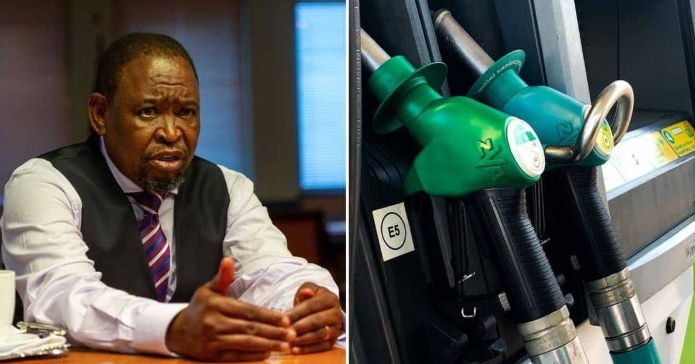
In Johannesburg, South Africa South Africa’s Minister of Finance, Enoch Godongwana, is considering an unprecedented reduction in the national fuel levy, a senior government official said on Tuesday, in a bid to cushion households and businesses from crippling pump price hikes driven by the ongoing conflict involving Iran.
The move comes as global crude oil prices have surged sharply amid the escalation of the US‑Israeli conflict with Iran, a development that has disrupted key shipping routes such as the Strait of Hormuz and lifted international fuel costs. Analysts say this geopolitical shock is now rippling through import‑dependent economies like South Africa, where local fuel taxes weigh heavily on retail prices.
Fuel Levy on the Table Amid Price Surge
Under South Africa’s fuel pricing system, monthly adjustments incorporate international crude prices, the strength of the rand and several local levies including the general fuel levy which collectively form a significant portion of the pump price. With crude prices elevated and the rand under pressure, basic petrol and diesel are projected to surge by record amounts when the next official fuel pricing adjustment takes effect on 1 April 2026.
A senior government official, who spoke on condition of anonymity due to the sensitivity of the deliberations, confirmed that Minister Godongwana will announce his decision on fuel levies on Tuesday afternoon. That announcement is widely expected to include whether the levies will be reduced to help blunt the impending cost‑of‑living shock.
Political and Public Pressure Mounts
Pressure on the government has intensified from both opposition parties and economic stakeholders. The Democratic Alliance (DA) has publicly called for an immediate 50 % cut to fuel levies for at least six months, arguing that the state can find the necessary fiscal room to provide relief.
Separately, unions, business groups and civil society organisations have urged fiscal intervention to prevent what some analysts are calling one of the steepest petrol and diesel price hikes in South African history. Local reports estimate that petrol could rise by as much as R6 per litre and diesel by R10 per litre in early April if no fiscal relief is provided.
Government Response and Strategic Task Forces
President Cyril Ramaphosa has acknowledged rising concern about fuel prices and confirmed that a ministerial task team including officials from the Treasury, Mineral Resources and Energy, and trade ministries is assessing how to mitigate the fallout from heightened global energy costs. Government sources say the team’s mandate extends beyond fuel levies to broader economic pressures resulting from the Middle East crisis.
Despite this, the South African Reserve Bank last week elected to hold its key interest rate, warning that prolonged energy price shocks pose upside risks to inflation and could delay planned monetary easing.
Economic Pain for Households and Sectors
The possible fuel levy reduction comes against the backdrop of sharp inflationary pressures and real economic strain. Households and transport‑dependent sectors are already adjusting to higher input costs. In the agricultural sector, for example, diesel shortages and higher energy costs have prompted calls for more frequent fuel price adjustments and interventions to prevent rationing, especially ahead of the harvest season.
Observers say that any fuel levy cut will be politically and fiscally significant potentially reducing state revenue but offering immediate relief to consumers already struggling with the broader cost‑of‑living crisis. Experts warn that timing and scale will be critical to balance relief with fiscal sustainability.
What Happens Next?
Fuel levies have traditionally been adjusted in line with inflation and fiscal requirements. A cut particularly one significant enough to blunt the impact of global oil price shocks would mark a notable shift in South Africa’s fiscal policy approach to energy pricing. The decision, expected later today, will be closely watched by motorists, businesses and markets alike as the country navigates an increasingly volatile global energy landscape.
Get the latest news of our Loveworld News from our Johannesburg Stations and News Station South Africa, LN24 International
Related Posts
Some description text for this item