

Image: LN24
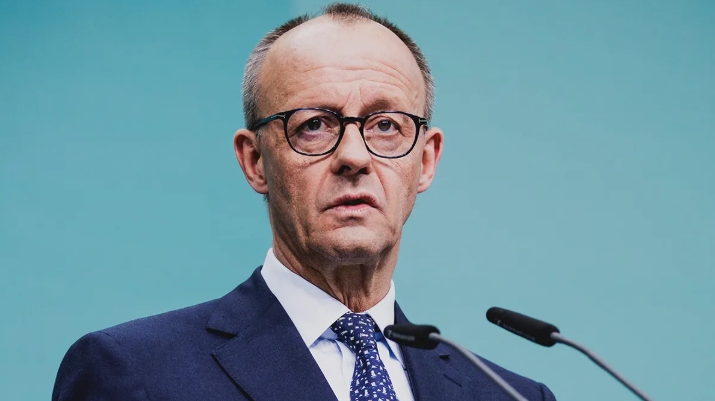
In Berlin German Chancellor Friedrich Merz marks one year in office this week under mounting geopolitical pressure, as relations between Berlin and Washington deteriorate into what officials describe as the most serious transatlantic crisis in decades.
What began as policy disagreements over trade, defense spending and global security has escalated into a broader strategic rift, fueled by disputes over the wars in Ukraine and Iran, U.S. troop deployments in Europe, and diverging visions for NATO’s future.
Strained U.S.–Germany Relations Reach New Low
Tensions between Germany and the United States have intensified sharply in recent weeks following Washington’s decision to withdraw approximately 5,000 troops from German bases, a move that has alarmed NATO allies and signaled a potential shift in U.S. military priorities in Europe.
The withdrawal followed a series of public exchanges between Chancellor Merz and U.S. President Donald Trump, particularly after Merz criticized aspects of U.S. strategy in the ongoing Middle East conflict. The Pentagon described some of Merz’s remarks as “inappropriate,” further straining diplomatic channels.
Germany currently hosts roughly 35,000–40,000 U.S. troops, making it one of the most important American military hubs outside the United States.
NATO Unity Under Pressure
The troop reduction has raised concerns within NATO about long-term deterrence capabilities in Europe, particularly amid continued instability on the eastern flank due to Russia’s war in Ukraine.
While NATO officials have sought to downplay fears of a capability gap, acknowledging that Europe must strengthen its own defense posture, the political signal from Washington has been interpreted in Berlin as part of a broader U.S. pivot away from Europe.
German Foreign Minister Johann Wadephul insisted this week that NATO’s deterrence remains intact but stressed that Europe must accelerate its own military modernization efforts.
Merz’s Foreign Policy Under Scrutiny
Chancellor Merz, a long-time transatlanticist, has repeatedly reaffirmed his commitment to the United States and NATO, calling the alliance “indispensable” to European security. However, his first year in office has been marked by growing friction with Washington and increasing uncertainty over Germany’s strategic direction.
Merz has also faced criticism at home for his handling of foreign policy crises, particularly as Germany navigates economic stagnation, coalition tensions, and rising political polarization.
Despite this, his government has pursued an ambitious defense agenda, including plans to expand the Bundeswehr and significantly increase military spending, aiming to make Germany the strongest conventional military power in Europe.
A Widening Strategic Divide
Analysts say the current crisis reflects deeper structural changes in the transatlantic relationship. Washington’s increasingly selective engagement in European security, combined with Europe’s push for greater strategic autonomy, is reshaping NATO’s internal balance.
Merz himself has warned of a potential “deep rift” between Europe and the United States, while also insisting that cooperation remains essential in confronting global threats ranging from Russia’s aggression to instability in the Middle East.
At the same time, trade tensions and disputes over defense burden-sharing continue to complicate relations, with U.S. tariffs on European goods and disagreements over military commitments adding economic pressure to political strain.
Domestic and International Challenges Ahead
Domestically, Merz faces growing political pressure as his coalition struggles with sluggish economic recovery and increasing competition from the far-right Alternative for Germany (AfD), which has surged in recent polling.
Internationally, Germany is attempting to balance its traditional reliance on U.S. security guarantees with a renewed push for European strategic independence.
With the war in Ukraine ongoing and tensions in the Middle East escalating, Germany’s role as a stabilizing force in Europe is under increasing scrutiny.
Outlook
As Chancellor Merz enters his second year in office, his leadership is being defined by one central challenge: managing a historic transition in Germany’s relationship with the United States while maintaining European unity in an increasingly fragmented global order.
Whether Berlin can preserve its transatlantic partnership or adapt to a more autonomous European security framework may define the next decade of Western alliance politics.
Get the latest news of our Loveworld News from our Johannesburg Stations and News Station South Africa, LN24 International
Related Posts
Some description text for this item