

Image: LN24
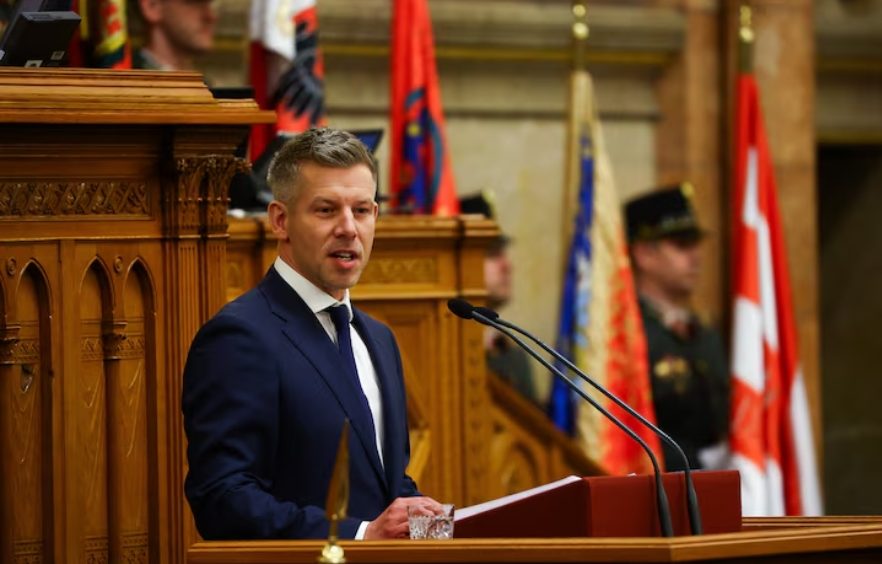
Hungary’s new government, led by Prime Minister Péter Magyar, has unveiled an ambitious reform programme aimed at reshaping the country’s economy, restoring relations with the European Union, and dismantling key elements of the political system built during the 16-year rule of former Prime Minister Viktor Orbán.
The new administration, sworn into office this week after Magyar’s Tisza party won a landslide election victory, says it plans major changes across the economy, judiciary, foreign policy, healthcare, energy and anti-corruption systems.
The political transition marks one of the biggest shifts in Hungarian politics since the country joined the European Union in 2004.
A New Economic Model Focused on Productivity
The Magyar government says it wants to replace Hungary’s previous economic strategy heavily reliant on low-cost labour and foreign manufacturing with a more innovation-driven economy focused on productivity, skilled workers and higher-value industries.
Finance Minister Andras Karman said the government plans to introduce stricter fiscal discipline and create a more predictable business environment after years of what officials described as corruption-distorted public spending under the previous administration.
The government aims to reduce Hungary’s budget deficit from around 7% of GDP to the European Union target of 3% by 2030 while also lowering public debt levels.
Officials have also pledged to review public procurement contracts and state spending to prevent what they call “money being drained by corruption.”
Economic reforms expected under the new administration include:
- A possible wealth tax on high-income individuals
- Lower VAT on essential goods
- Income rebates for low earners
- Greater support for small and medium-sized businesses
- Increased investment in technology and innovation
- Plans to adopt the euro by 2030
Economists say Hungary’s struggling economy and frozen EU funds remain among the government’s biggest challenges.
Rebuilding Relations With the European Union
A central goal of the new government is repairing Hungary’s strained relationship with the European Union after years of disputes over rule-of-law issues, media freedom and judicial independence during Orbán’s rule.
Magyar has repeatedly pledged to secure the release of billions of euros in EU funds frozen by Brussels over concerns about corruption and democratic backsliding.
The administration hopes to recover:
- €6.4 billion in EU recovery grants
- €3.9 billion in EU loans
- Additional cohesion funding for healthcare, education, housing, and energy efficiency projects
Justice Minister Marta Gorog said Hungary would revise laws that conflict with European legal standards and democratic norms.
One of the most controversial changes involves plans to amend Hungary’s “child protection law,” which restricted access to LGBTQ-related content and was heavily criticized by the EU and human rights groups.
The government also plans to join the European Public Prosecutor’s Office as part of broader anti-corruption reforms.
Anti-Corruption Crackdown Planned
Magyar campaigned heavily on promises to tackle corruption and investigate alleged abuses under the previous administration.
The government plans to establish a National Asset Recovery and Protection Office tasked with investigating suspicious state contracts, recovering allegedly misused public funds and examining corruption linked to the Orbán era.
Officials have also pledged major transparency reforms, including reviews of state assets and contracts and efforts to restore trust in public institutions and statistics agencies.
Several Orbán-era officials and appointees have reportedly been asked to resign by the end of May.
Major Changes to Government Power Structure
The new administration says it wants to reduce the concentration of power around the prime minister’s office that characterized the Orbán years.
Under proposed reforms:
- Key ministers will have veto powers over legislation before it reaches parliament
- Prime ministers would be limited to two terms
- Separate ministries for health, education, and the environment would be restored
- State media would undergo restructuring and reform
Supporters say the changes are intended to strengthen checks and balances and restore democratic institutions.
Energy Policy and Russia Relations
Energy policy represents another major area of change.
The new government plans to review Hungary’s controversial nuclear power expansion agreement with Russia’s Rosatom involving the Paks nuclear plant project.
Officials say Hungary will continue seeking energy security while diversifying away from excessive dependence on Russian oil and gas imports.
Foreign Minister Anita Orbán said Hungary would no longer serve as “Moscow’s Trojan horse” inside the European Union and pledged to rebuild trust with NATO allies and EU partners.
At the same time, the government has signaled it wants pragmatic relations with both China and the United States.
Migration and Ukraine Policy
Although Magyar’s government is generally viewed as more pro-European than Orbán’s administration, it is not expected to dramatically soften Hungary’s stance on migration.
Reports suggest the government plans to maintain strong border controls and continue resisting parts of the EU migration pact.
On Ukraine, the administration supports rebuilding relations with European allies but has remained cautious about direct military involvement or large-scale arms transfers.
A Defining Moment for Hungary
The new government’s agenda has generated optimism among investors and pro-European supporters who see the changes as a potential turning point for Hungary after years of confrontation with Brussels.
However, analysts warn the administration faces enormous challenges, including weak economic growth, high public debt, energy pressures, and deep political polarization.
Many observers say the success or failure of Magyar’s reforms could determine Hungary’s political and economic direction for decades to come.
Get the latest news of our Loveworld News from our Johannesburg Stations and News Station South Africa, LN24 International
Related Posts
Some description text for this item