

Image: LN24
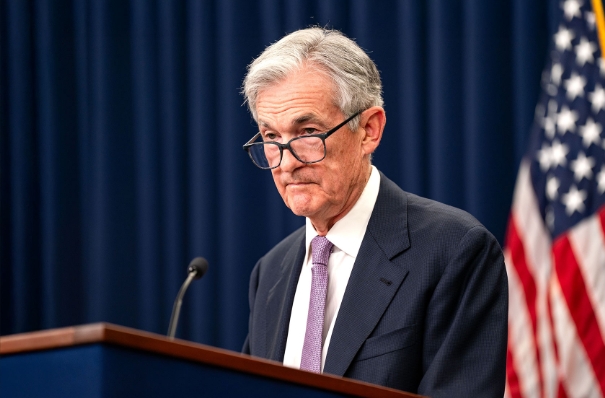
Jerome Powell has stepped down as chair of the U.S. Federal Reserve, marking the end of a closely watched tenure that shaped American and global economic policy through periods of inflation shocks, pandemic recovery, banking turbulence and aggressive interest rate hikes.
Powell’s resignation sent immediate ripples through global financial markets, with investors, economists, and political leaders closely watching how the White House and the Federal Reserve will manage the transition at a critical moment for the U.S. economy.
The Federal Reserve confirmed Powell’s departure in a statement, thanking him for his years of service and leadership during some of the most volatile economic conditions in modern history.
End of a Transformative Era at the Federal Reserve
Powell first became Federal Reserve chair in 2018 after being nominated by then-President Donald Trump and was later reappointed for a second term.
During his leadership, the Fed faced multiple historic crises, including the COVID-19 pandemic, surging inflation, supply chain disruptions, regional banking instability, and intense political scrutiny over monetary policy decisions.
Powell initially guided the central bank through an era of near-zero interest rates and massive economic stimulus aimed at preventing a deep recession during the pandemic.
However, the Fed later shifted aggressively toward tightening monetary policy as inflation surged to its highest levels in decades.
Under Powell’s leadership, the Federal Reserve carried out one of the fastest interest rate hiking cycles in modern U.S. history in an effort to bring inflation under control.
Markets React to Uncertainty
Financial markets reacted cautiously to the resignation announcement, with analysts warning that leadership uncertainty at the Federal Reserve could affect investor confidence and future monetary policy expectations.
The U.S. dollar fluctuated against major currencies while stock markets experienced volatility as traders assessed the implications of Powell’s departure.
Bond markets also came under close scrutiny, as investors attempted to predict whether a new Fed leadership team would maintain the current policy path on inflation and interest rates.
Economists noted that Powell’s resignation comes at a delicate time for the American economy, with inflation pressures easing but growth concerns and geopolitical tensions still clouding the global outlook.
White House Expected to Move Quickly
Attention is now turning to who will replace Powell as head of the world’s most influential central bank.
The White House is expected to begin consultations immediately over a successor capable of reassuring financial markets while navigating mounting political and economic pressures.
Potential candidates reportedly include senior Federal Reserve officials, former Treasury figures, and respected economists with experience in monetary policy and financial regulation.
The next Fed chair will inherit several major challenges, including balancing inflation control with economic growth, managing debt concerns, and responding to ongoing global economic uncertainty.
Powell’s Legacy Likely to Be Debated
Powell leaves office with a mixed but highly consequential legacy.
Supporters credit him with helping steer the U.S. economy away from collapse during the pandemic and restoring inflation closer to the Federal Reserve’s long-term target.
Critics, however, argue the Fed waited too long to respond to inflationary pressures, forcing policymakers into aggressive rate hikes that increased borrowing costs for households and businesses.
Powell also faced criticism from across the political spectrum during his tenure, with some Republicans accusing the Fed of damaging growth through high interest rates while some Democrats pushed for stronger employment protections and financial regulation.
Despite those debates, many analysts view Powell as one of the most influential central bank leaders of the modern era due to the scale of economic crises faced during his time in office.
Global Implications
Because the Federal Reserve plays a central role in the global financial system, Powell’s resignation is expected to have worldwide implications.
Emerging markets, international investors, and central banks across Europe, Asia and Africa closely monitor Fed policy because U.S. interest rates influence global borrowing costs, investment flows, and currency markets.
Any major shift in Federal Reserve strategy under new leadership could therefore affect economies far beyond the United States.
For now, markets are expected to remain focused on signals from Washington regarding the timing of Powell’s departure and the identity of his replacement.
Get the latest news of our Loveworld News from our Johannesburg Stations and News Station South Africa, LN24 International
Related Posts
Some description text for this item