

Image: ln24SA
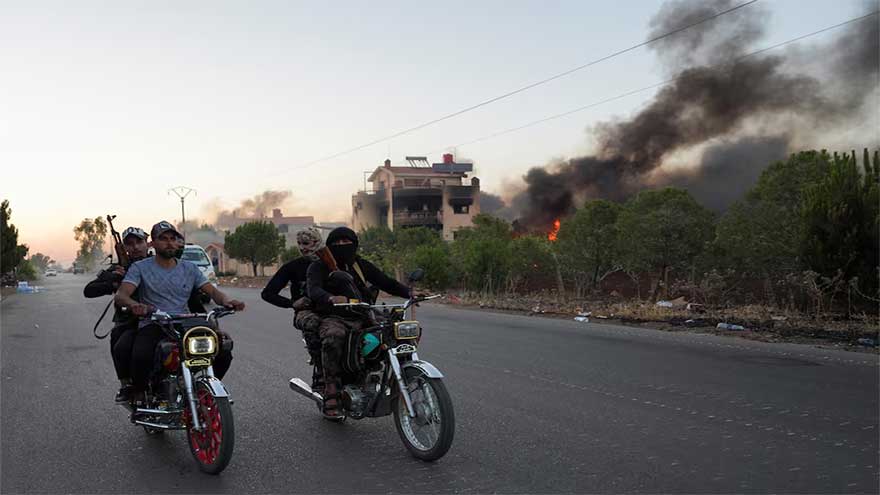
Calm was reported in the southern Syrian city of Sweida on Sunday after tribal fighters were said to have withdrawn, following days of intense clashes. The Islamist-led government announced the pullback, while international calls intensified for a halt to the violence.
The recent bloodshed in Sweida, with reports of hundreds killed, has posed a serious challenge to interim President Ahmed al-Sharaa. Last week, Israel launched airstrikes in response to the situation, citing its support for the Druze community. Despite a ceasefire announcement, fighting had continued into Saturday.
By Sunday morning, local residents noted an absence of gunfire, coinciding with an overnight announcement from the interior ministry that tribal forces had left the city. Security forces were seen deployed near the outskirts of Sweida, blocking roads and monitoring tribal gatherings in the area.
Describing the situation, one local dentist, Kenan Azzam, called it “a tense calm,” and noted ongoing hardships such as shortages of water and electricity. “Hospitals are unusable, and there are still many dead and wounded,” he said.
Another resident, Raed Khazaal, highlighted the urgent need for humanitarian aid. “Homes are destroyed. The smell of corpses lingers at the national hospital,” he reported in a voice message from inside the city.
The U.S. envoy for Syria, Tom Barrack, condemned the violence and urged all factions to disarm and cease hostilities immediately. “These brutal acts by all sides erode the government’s authority and threaten any remaining stability,” he said, adding that Syria is at a critical turning point where peace must take precedence over revenge.
The Druze, a small but influential religious minority found in Syria, Lebanon, and Israel, have long faced discrimination and suspicion from some hardline Sunni groups due to their beliefs, which diverge from mainstream Islam.
The fighting in Sweida erupted a week ago with confrontations between Druze and Bedouin fighters. Government troops were later deployed to contain the violence but were drawn into the conflict themselves. Residents accused these troops of severe abuses, including executions in homes and on the streets.
In a speech last Thursday, President Sharaa vowed to defend Druze rights and promised accountability for those responsible for violence against them. He blamed “outlaw groups” for initiating the unrest.
In response to the escalating violence, Israel struck Syrian government positions in Sweida and also targeted the defence ministry in Damascus. Prime Minister Benjamin Netanyahu later emphasised Israel’s intention to establish a demilitarised zone along the border region, extending from the Golan Heights to the Druze Mountain area. He reaffirmed Israel’s commitment to protecting Druze populations.
The United States, however, stated it did not endorse the Israeli airstrikes. On Friday, an Israeli official said Damascus would be allowed limited access to the Sweida region for a short period.
According to a Syrian security source, internal security forces have now set up checkpoints in both the eastern and western sectors of Sweida province, where many tribal fighters had been located. Some of these groups have reportedly returned to Damascus or northern Syria.
A UK-based monitoring organisation has estimated that over 940 people have died in the clashes since the fighting began last week, though these figures have not been independently confirmed.
Get the latests of our Loveworld News from our Johannesburg Stations and News Station South Africa, LN24 International