

Image: ln24SA
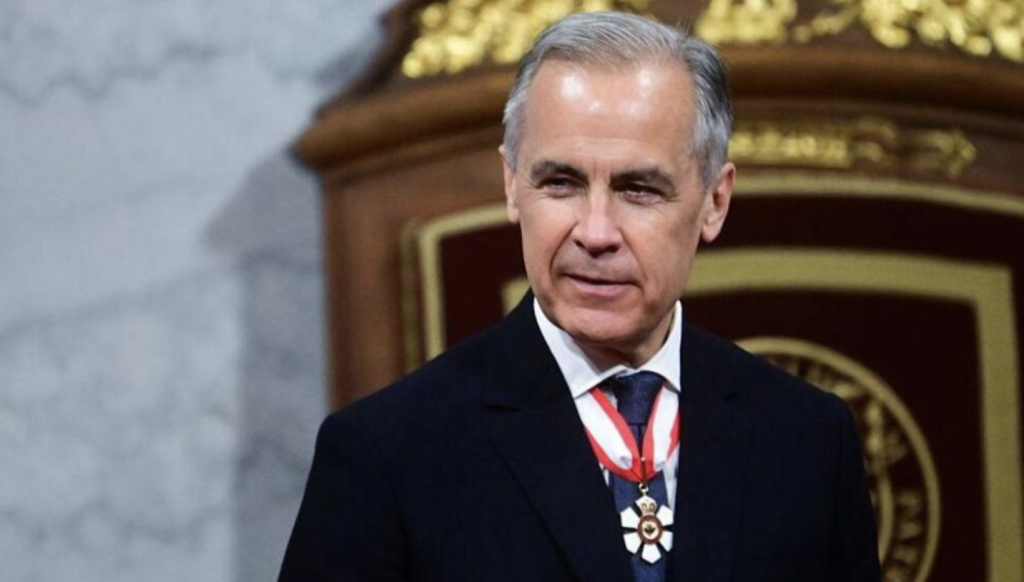
Prime Minister Mark Carney is preparing to unveil a major defence spending increase that sources say will enable Canada to meet NATO’s goal of allocating 2% of its gross domestic product (GDP) to military expenditures during the current fiscal year—years ahead of previously stated plans.
According to two senior government insiders, Carney will outline the new defence and security investment strategy in a speech on Monday at the University of Toronto’s Munk School of Global Affairs. The initiative includes fast-tracking the acquisition of military equipment and technology aimed at enhancing national security, protecting sovereignty, and meeting alliance commitments.
The sources, who were not authorized to speak publicly, say the plan represents the most significant military investment by Canada since the Second World War.
NATO members have long agreed to devote 2% of their GDP to defence, though Canada has consistently fallen short—spending just 1.45% as of 2024, according to a recent alliance report. Canada’s shortfall has drawn criticism, especially in light of increasing global security threats. Among the critics is former U.S. President Donald Trump, who has argued that the United States carries a disproportionate share of the alliance’s defence burden.
The planned increase would allow Canada to hit the 2% target by the end of the 2025–2026 fiscal year and surpass it in subsequent years, marking a substantial acceleration from the previously stated timeline of reaching the target by 2030. The proposal dramatically alters the country’s defence trajectory, committing billions in new spending.
This announcement is expected ahead of the NATO summit on June 24–25, where member states are anticipated to support a new benchmark of 3.5% of GDP for military spending, plus an additional 1.5% for broader security-related investments.
Planned investments include:
Higher pay for Armed Forces personnel
Procurement of new aircraft, armed vehicles, drones, ammunition, and surveillance technology for Arctic and maritime monitoring
Maintenance and repair of existing equipment
Expanded healthcare services for military members
Increased funding and capabilities for the Canadian Coast Guard
Boosts to domestic defence manufacturing and innovation in emerging technologies like artificial intelligence, cyber defence, quantum computing, and space systems
One of the long-standing barriers to upgrading military capabilities has been Canada’s sluggish procurement system. During the recent federal election campaign, Carney’s party pledged to establish a dedicated defence procurement agency to speed up the process and prioritize domestic production.
A potential structural shift may also occur, with the Canadian Coast Guard expected to be moved from the Department of Fisheries and Oceans to the Department of National Defence. This reorganization would align Canada’s structure more closely with that of the United States, where the Coast Guard is part of the military.
Currently, the Coast Guard operates with an annual budget of roughly $2.5 billion—small compared to the over $41 billion allocated to national defence. Whether this transition would alter the Coast Guard’s civilian status remains uncertain.
The new defence initiative also supports existing strategic projects, such as the Arctic over-the-horizon radar system, a counter-drone initiative, long-range weapons, new support ships, increased domestic ammunition output, and more armoured vehicles.
Despite the scale of the commitment, it may still fall short in the eyes of key allies. Over the past two decades, what was once a suggested benchmark of 2% GDP in defence spending has come to be viewed by many NATO members as the minimum standard.
The full-scale war in Ukraine has reignited concerns about Russian aggression, prompting renewed urgency among Western nations to bolster their defences. NATO’s current Secretary-General has said he expects members to agree on a 5% GDP spending goal—split between military and broader security investments—at the upcoming summit.
“Strong defences send a clear message – no one should ever think of attacking us,” he recently said in a speech, emphasising that sticking to the 2% goal alone may no longer be enough.
Get the latests of our Loveworld News from our Johannesburg Stations and News Station South Africa, LN24 International