

Image: ln24SA
Pakistan Alleges India Plans Attack Within 36 Hours; Calls for Global Intervention
The decades-long rivalry between South Asia’s two nuclear-armed neighbors, India and Pakistan, has entered a new phase of volatility, with Pakistan now alleging that India is planning a military strike within the next 24 to 36 hours.
Speaking to the press, Pakistan’s Information Minister, Attaullah Tarar, stated that Islamabad had received “credible and actionable intelligence” suggesting an imminent attack by the Indian Armed Forces. The minister warned that such an act would be a “grave provocation” and urged international powers and the United Nations to intervene diplomatically to de-escalate tensions.
“We are calling on the international community to take immediate notice. Any act of aggression will be met with a full-spectrum response,” Tarar said.
What Sparked the Current Tensions?
The current flare-up stems from a terror attack on April 25th, in which 26 civilians were killed at a tourist site in India-administered Kashmir. Indian officials quickly blamed Pakistan-based militant groups, alleging cross-border support and infiltration. India has since claimed that its intelligence agencies have linked the perpetrators to operatives supported from within Pakistan.
Pakistan, in turn, has strongly denied any involvement, labeling the accusations “baseless and politically motivated,” and instead has called for a neutral, international investigation into the attack.
Retaliatory Measures Already Underway
Since the attack, both countries have taken a series of retaliatory diplomatic and strategic actions, signaling a rapid deterioration in relations:
India has suspended cooperation under the Indus Waters Treaty, a key bilateral agreement governing the use of shared rivers a significant move given the treaty’s role as a stabilizing mechanism since 1960.
Pakistan responded by closing its airspace to Indian airlines, disrupting regional air traffic and escalating the standoff further.
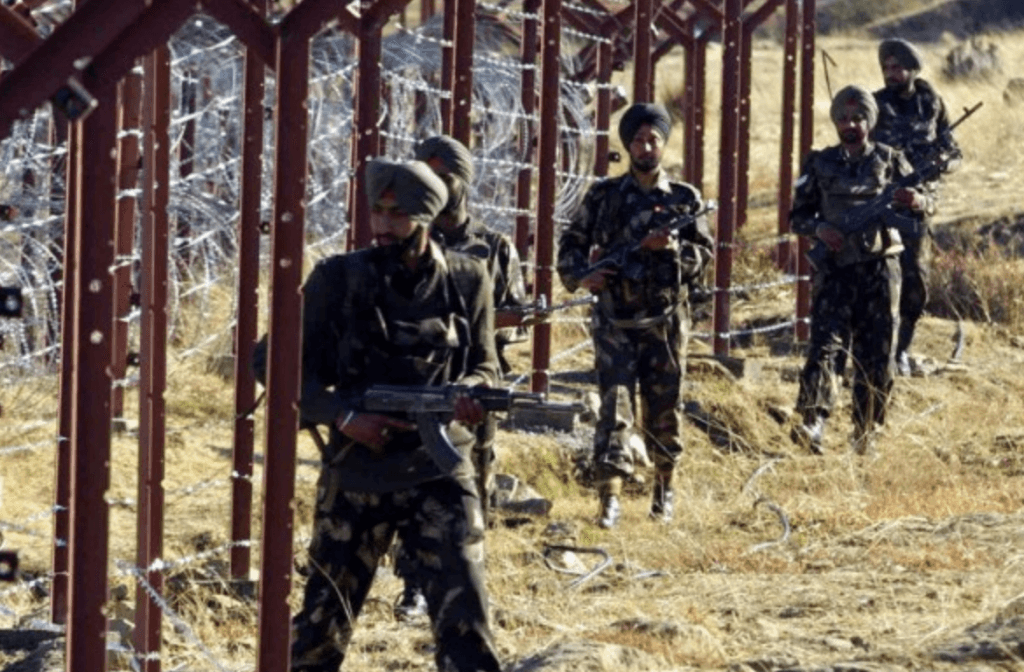
Military forces on both sides have been placed on heightened alert, with reports of troop movements near the Line of Control (LoC), the de facto border that divides Kashmir.
A History of Fragile Peace and Periodic Confrontation
India and Pakistan have shared a tense and often hostile relationship since their partition in 1947, having fought three full-scale wars and numerous skirmishes, most of them centered around the disputed region of Jammu and Kashmir.
The most recent similar escalation occurred in February 2019, after the Pulwama suicide bombing that killed 40 Indian paramilitary personnel. That attack, also blamed on a Pakistan-based group, led to airstrikes by India inside Pakistani territory and subsequent retaliatory actions by Pakistan, pushing the region to the brink of full-scale war.
Regional and Global Concerns Mount
With both countries possessing nuclear weapons and vast conventional armies, the risk of escalation is drawing serious concern globally. Diplomatic missions in New Delhi and Islamabad are reportedly on high alert, and the United Nations, United States, and European Union have all urged both sides to exercise maximum restraint.
Analysts warn that in a tightly interlinked and volatile geopolitical environment especially with ongoing global conflicts a fresh crisis between India and Pakistan could have serious international consequences.
What Happens Next?
As the alleged 36-hour window ticks down, all eyes are on the diplomatic corridors in New Delhi, Islamabad, and New York. Both militaries remain on high alert, and any movement along the LoC could trigger unintended consequences. Back-channel diplomacy, if it exists, is under intense pressure to produce results.
LN24 International will continue to monitor developments closely, bringing you verified updates, exclusive interviews, and in-depth analysis on this rapidly evolving situation.
Get the latests of our Loveworld News from our Johannesburg Stations and News Station South Africa, LN24 International
Related Posts
Some description text for this item