

Image: ln24SA
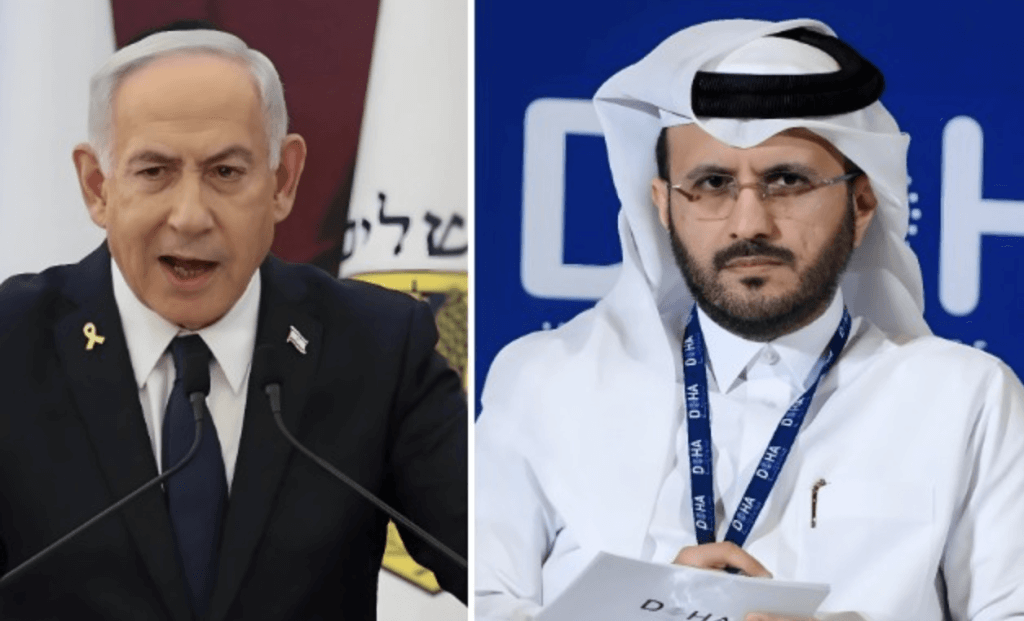
Tensions have escalated between Israel and Qatar as negotiations over a potential ceasefire in Gaza stall, with Israeli officials accusing the Gulf state of acting in bad faith.
In a sharp statement released Sunday, Israeli Prime Minister Benjamin Netanyahu’s office criticized Qatar’s role as a mediator in the Gaza conflict, accusing Doha of “playing both sides.” The statement challenged Qatar to choose between supporting what it called “civilization” or aligning with “Hamas barbarism.”
“Qatar cannot serve as a neutral mediator while also providing political cover and financial support to Hamas,” a senior Israeli official said, further accusing the Gulf state of prolonging the war by emboldening the militant group.
The comments drew a swift and firm response from Qatar’s Foreign Ministry. Spokesperson Majed Al Ansari rejected the accusations as “inflammatory and irresponsible,” defending Qatar’s longstanding role in regional diplomacy.
“Qatar is committed to its role as a mediator with the goal of securing a ceasefire and alleviating humanitarian suffering in Gaza,” Al Ansari said in a televised statement. He also condemned Israel’s language, warning that such rhetoric “echoes the narrative of regimes historically accused of using dehumanizing language to justify violence against civilians.”
A Delicate Diplomatic Balancing Act
Qatar has positioned itself as a key intermediary in multiple regional conflicts, including efforts to broker ceasefires between Israel and Hamas. The Gulf state maintains diplomatic relations with both Western nations and Islamist factions, allowing it to act as a communication bridge in tense environments.
However, Israel has long voiced concerns about Qatar’s financial support to Gaza, particularly the millions of dollars in aid sent annually, some of which Israel alleges end up in the hands of Hamas operatives.
Despite these tensions, Qatari mediation has been instrumental in previous ceasefire deals, including prisoner exchanges and short-term truces. International actors, including the United States and Egypt, have historically relied on Doha’s influence over Hamas to bring parties to the table.
Ongoing Ceasefire Efforts in Jeopardy
The war in Gaza, now entering its seventh month, has resulted in thousands of casualties and has sparked international pressure for an immediate ceasefire. Talks have been ongoing in Cairo and Doha, but recent developments suggest that diplomatic efforts are faltering.
Israel’s public criticism of Qatar could complicate those efforts further, experts warn. “When one of the key mediators is publicly undermined, it decreases the chances of reaching an agreement in the short term,” said Lina Khoury, a Middle East analyst at the Geneva Peace Institute.
Both sides have signaled a desire for a ceasefire, but remain far apart on key issues, including the future of Hamas’s leadership, security guarantees for Israel, and long-term humanitarian access for Palestinians in Gaza.
Regional and Global Reaction
While Qatar’s allies, including the U.S., have not publicly responded to Israel’s statement, the diplomatic spat adds strain to an already fragile mediation process. U.S. Secretary of State Antony Blinken is expected to visit the region later this month, and will likely seek to mend ties between key players to keep ceasefire discussions alive.
For now, the diplomatic standoff highlights the increasingly complex dynamics shaping the Gaza conflict and casts uncertainty over the near-term prospects for peace.
Get the latests of our Loveworld News from our Johannesburg Stations and News Station South Africa, LN24 International
Related Posts
Some description text for this item