

Image: ln24SA
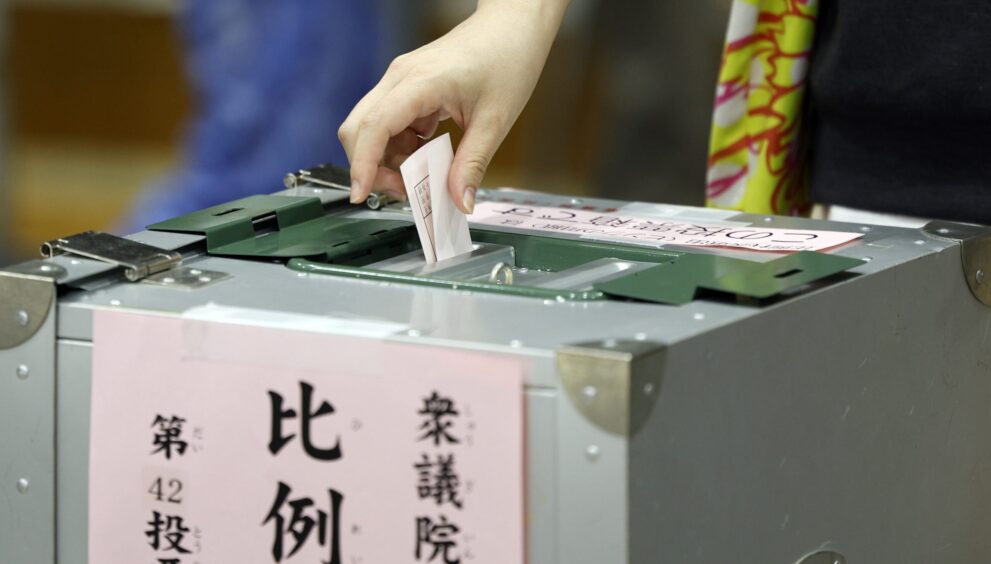
Japan held an upper house election on Sunday, viewed as a significant test for Prime Minister Shigeru Ishiba’s administration. The vote comes at a time of increasing public concern over inflation and immigration, which could affect the ruling coalition’s ability to maintain its legislative majority.
Polling stations closed at 8 p.m. local time (1100 GMT), with preliminary results expected shortly thereafter based on exit polling.
Surveys conducted ahead of the election suggested that the ruling Liberal Democratic Party (LDP), along with its coalition partner Komeito, might struggle to secure the 50 seats required to retain their majority in the 248-seat upper house, where half the seats are being contested.
Smaller opposition parties have gained traction during the campaign by advocating for tax reductions and increased public spending. Among them is the Sanseito party, which has drawn support through a prominent online presence and a platform focused on national priorities and concerns over foreign influence.
Early voter turnout was relatively strong, with approximately 20% of registered voters casting ballots prior to election day, according to national broadcaster NHK. This marks an increase compared to the previous upper house election and could indicate heightened public engagement, though the timing of the vote over a holiday weekend may also have influenced participation rates.
Political analysts have noted that an underwhelming performance by the ruling coalition could introduce instability in financial markets and complicate ongoing trade negotiations with the United States. Japan faces a deadline of August 1 to reach a trade agreement, failure of which may result in the imposition of new tariffs on Japanese exports.
Rising prices—particularly in essential goods such as rice, which has reportedly doubled in cost over the past year—have placed additional pressure on the government. While opposition parties are calling for more robust economic relief, the LDP has emphasized the importance of fiscal responsibility and has opposed large-scale tax cuts and welfare spending increases.
The prime minister’s position has been weakened since October, when the LDP lost its majority in the more powerful lower house, marking the party’s poorest performance in 15 years. This outcome has made the administration more susceptible to no-confidence motions and raised the possibility of a snap general election.
Some voters have expressed dissatisfaction with the government’s performance. “The current administration has not resolved key issues,” said Kaoru Kawai, a 59-year-old writer who supported the Constitutional Democratic Party of Japan.
Despite its longstanding dominance in postwar Japanese politics, the LDP now faces growing pressure to adapt to changing economic and social conditions.
Get the latests of our Loveworld News from our Johannesburg Stations and News Station South Africa, LN24 International