

Image: ln24SA
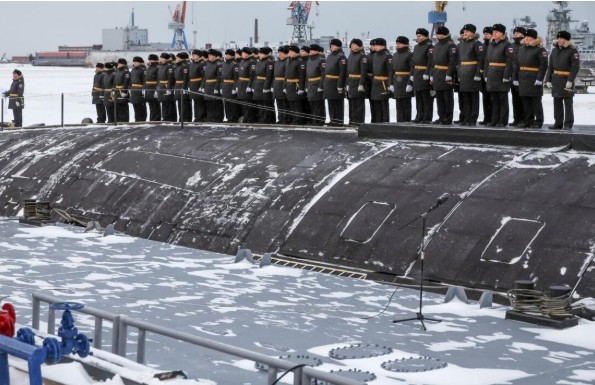
Russian President Vladimir Putin has announced a sweeping naval modernization strategy that will see the commissioning of over 50 new warships, including advanced submarines, guided missile destroyers, and logistical support vessels. The announcement came during a high-level security forum in St. Petersburg, marking one of the Kremlin’s most aggressive maritime expansions since the Cold War.
The naval buildup will extend Russia’s military reach across the Arctic, Baltic, Black Sea, and Pacific theaters, with construction already underway at several major shipyards. “We are entering a new era of Russian maritime strength,” Putin declared. “Our navy will be equipped to protect national interests, maintain strategic deterrence, and uphold balance in global maritime affairs.”
Strategic Objectives Behind the Buildup
This naval enhancement is not just symbolic it serves multiple geopolitical and military functions:
Arctic Dominance: With melting ice caps opening up trade and military routes, Russia seeks to solidify its claim over the Arctic. New icebreaker-equipped vessels and Arctic-class submarines are being prioritized.
Counter-NATO Presence: In the Baltic and Black Sea, where NATO has significantly increased patrols, Russia is deploying new missile cruisers and radar systems to maintain deterrence.
Pacific Projection: A bolstered Pacific Fleet strengthens Russia’s hand in the Asia-Pacific region, where tensions around Taiwan and North Korea have global implications.
Russia’s latest naval ambition harkens back to the Soviet era when Moscow aimed to rival the U.S. Navy across multiple oceans. The collapse of the USSR saw a significant decline in naval capability many warships were decommissioned or left in disrepair.
In the 2000s, a renewed push under Putin began modestly, but it wasn’t until the 2014 annexation of Crimea and worsening relations with the West that Moscow accelerated investment in maritime defense.
Modernization Through Technology
The Kremlin has also partnered with domestic defense manufacturers like United Shipbuilding Corporation to integrate AI-enabled command systems, electronic warfare capabilities, and stealth design into the new fleet. Special focus is being placed on nuclear-powered submarines such as the Borei-A class and new hypersonic missile systems that Russia claims can evade Western defenses.
Global Reactions and Military Analysts’ Take
Western governments have expressed concern, with NATO issuing a statement urging Russia to maintain transparency in military activities. U.S. defense officials have warned that “unchecked naval expansion in conflict-prone areas could increase the risk of escalation.”
Military analysts, however, say the real challenge will be sustainability. “Building 50 ships is one thing,” said retired U.S. Navy Admiral James McPherson. “But maintaining, staffing, and supplying them over time, especially under Western sanctions, is another story.”
What’s Next
With the first batch of ships set to be operational by late 2026, global navies will be watching closely. The balance of maritime power, especially in contested regions like the Arctic and South China Sea, could shift significantly depending on Russia’s execution of this ambitious plan.
Get the latests of our Loveworld News from our Johannesburg Stations and News Station South Africa, LN24 International