

Image: ln24SA
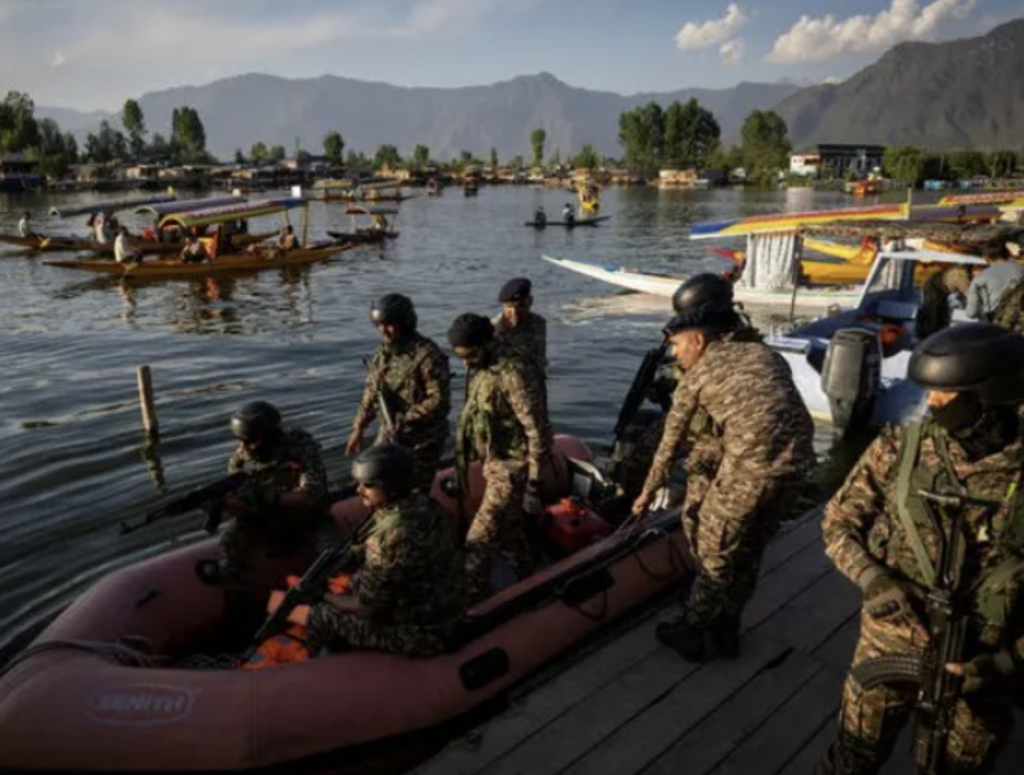
Tensions between India and Pakistan have sharply escalated following a deadly terror attack in the popular tourist town of Pahalgam in Indian-administered Kashmir. In the immediate aftermath, Indian and Pakistani forces reportedly exchanged heavy gunfire across the Line of Control (LoC), raising fears of a broader military confrontation.
The attack, which left multiple Indian security personnel dead and several civilians injured, has been widely condemned, with India blaming Pakistan-based militants for orchestrating the assault. New Delhi responded swiftly, not only with cross-border fire but also by test-firing a series of short-range missiles in what analysts view as a show of military readiness.
In a provocative move, Pakistan’s Minister for Railways, Muhammad Hanif Abbasi, issued a direct warning to India during a speech in Rawalpindi. “Pakistan’s 130 nuclear weapons are not models on a shelf they are meant to be used if our sovereignty is threatened,” Abbasi declared, underscoring Islamabad’s position amid growing hostilities.
China Urges Restraint, Supports Pakistan
Amid rising regional tension, Chinese Foreign Minister Wang Yi held a phone call with his Pakistani counterpart, Ishaq Dar. According to a readout from China’s Foreign Ministry, Wang reaffirmed China’s support for Pakistan’s sovereignty and security interests, while also urging both countries to avoid escalation.
Wang called for “maximum restraint” from both sides and recommended an “impartial and thorough investigation” into the Pahalgam attack. His remarks signal Beijing’s growing concern about stability in South Asia, especially as it maintains strong diplomatic and economic ties with Islamabad.
International Concern Mounts
Global powers have begun monitoring the situation closely. The United Nations has urged dialogue and de-escalation, while U.S. and European officials are reportedly in touch with both governments behind the scenes to prevent further military escalation.
This is not the first time a terror incident in Kashmir has triggered cross-border tensions, but the current geopolitical climate marked by heightened military activity and increasingly public threats has analysts warning that the risk of miscalculation is higher than in past crises.
As both countries remain on high alert, calls for diplomacy are growing louder, but so too are fears that any further provocation could push the two nuclear-armed neighbors into a deeper conflict.
Get the latests of our Loveworld News from our Johannesburg Stations and News Station South Africa, LN24 International
Related Posts
Some description text for this item