

Image: ln24SA
Thailand’s military announced that it launched airstrikes on Monday against Cambodian positions along the two countries’ long disputed border, following deadly clashes in which both sides accused the other of breaking a ceasefire.
What Happened
- The Thai army said the airstrikes were in response to an earlier incident in which a Thai soldier was killed and several others wounded when, according to Bangkok, Cambodian forces opened fire and massed heavy weaponry near the border.
- Cambodia denied initiating the violence, with its defence officials calling Thailand’s air raids unprovoked aggression. Civilian casualties were reported among them, three Cambodian civilians were seriously injured, while several Thai soldiers were wounded.
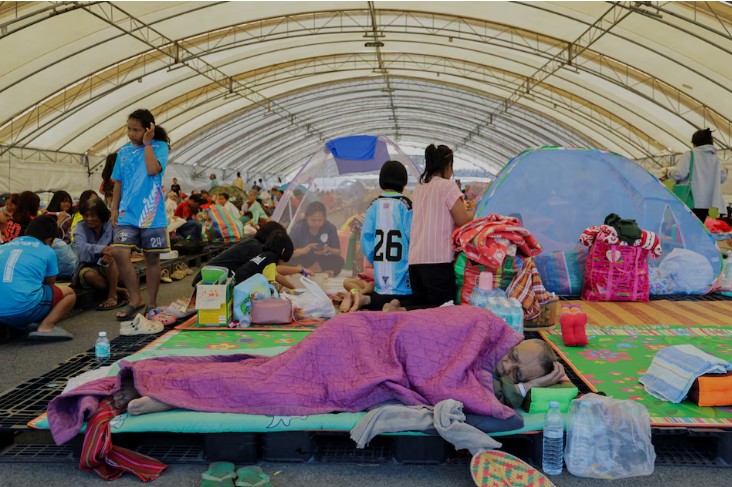
- Local authorities on both sides have begun mass evacuations. Hundreds of thousands of residents living near the border region both Thai and Cambodian are being displaced as hostilities intensify.
Historical Context: Why This Border Fights Keeps Flare Up
The conflict between Thailand and Cambodia goes back many decades rooted in colonial era border demarcations and competing claims over border territories.
- A key flashpoint has long been the area surrounding the ancient temple Preah Vihear Temple and other nearby border zones, where territorial claims overlap.
- Previous rounds of conflict erupted in the 2008–2011 period, when tensions over heritage-site claims and border maps triggered repeated gunbattles.
- After years of relative calm, 2025 saw a dramatic resurgence in violence. In May, a clash left a Cambodian soldier dead; a few months later, in July, heavy fighting erupted in multiple border areas with artillery, rocket fire, and airstrikes.
- A ceasefire was brokered in July–October 2025 with support from regional mediators and international actors. But the truce broke down after mutual accusations of provocations, land-mine incidents, and troop movements.
Consequences On Civilians, Diplomacy & Regional Security
Humanitarian Impact:
- The renewed fighting has triggered large scale displacements. Thousands of families on both sides of the border have fled their homes and sought shelter elsewhere.
- Civilian casualties and injuries have been reported, including from rocket fire, shelling, and airstrikes affecting homes, schools, hospitals, and religious sites.
- Aid agencies and human rights observers are warning of a potential humanitarian crisis if the conflict continues to escalate.
Diplomatic Fallout:
- Relations between Bangkok and Phnom Penh already fragile have deteriorated further. Trust has eroded, and ongoing border diplomacy may be derailed.
- Regional actors and neighbouring countries have begun pushing for restraint. There are growing calls for re-engaging diplomatic and international mediation efforts to prevent further escalation and broader instability in Southeast Asia.
Regional Security Risks:
- The use of airstrikes marks a significant escalation; what began as localized clashes has evolved into more expansive military engagements. This could destabilize the wider border region.
- If the violence spreads or triggers retaliatory strikes, the risk of a protracted conflict involving more border areas remains high raising concern for regional security, refugee flows, and international intervention.
What to Watch Next
- Whether diplomatic mediation by regional powers or international bodies can be reactivated to halt the fighting and negotiate a renewed, stable ceasefire.
- The humanitarian response: how Thailand and Cambodia, along with international agencies, will address displacement, civilian protection, and relief efforts.
- Long term border demarcation talks, possibly involving international monitoring or arbitration, to prevent future flare ups.
- The potential ripple effects on Southeast Asia especially in neighbouring countries given the risk of refugees, cross border tensions, and regional instability.
Subtitle
Related Posts
Some description text for this item