

Image: ln24SA
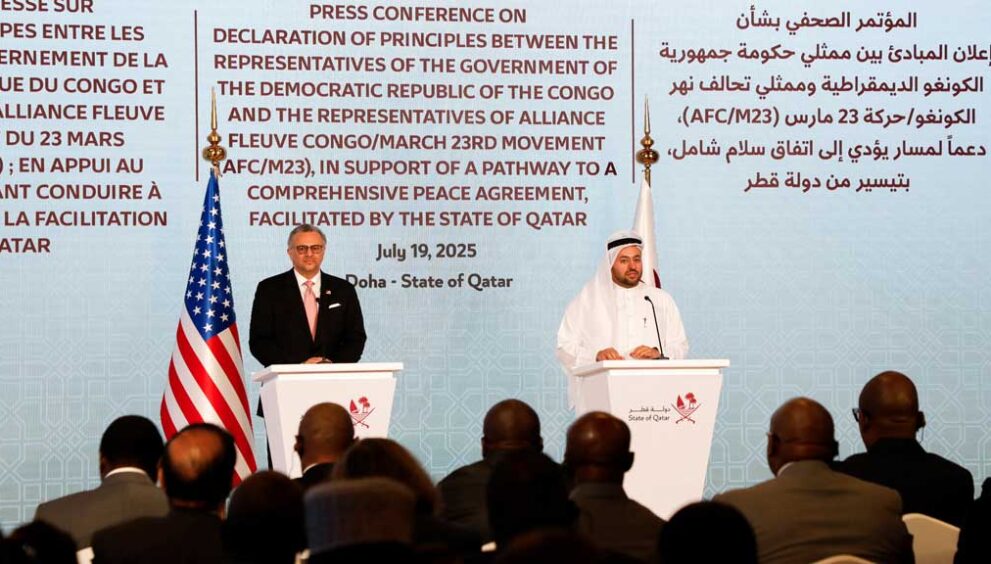
The Democratic Republic of Congo and the M23 rebel group have agreed to sign a peace deal by August 18, marking a significant step forward despite ongoing unresolved issues. The commitment was made during a ceremony in Doha on Saturday, where both parties endorsed a declaration of principles outlining the new timeline. This development follows several months of mediation efforts facilitated by Qatar, which began in April.
The United States, which has held parallel talks involving Congo and Rwanda, has been encouraging a lasting resolution to the conflict. Former President Donald Trump has expressed hope that a stable peace would encourage increased Western investment in Congo, a country rich in valuable minerals like gold, copper, cobalt, lithium, and tantalum.
In a related move last month, the foreign ministers of Rwanda and Congo signed a peace deal and met with Trump in Washington. During that visit, the U.S. extended invitations to Presidents Felix Tshisekedi of Congo and Paul Kagame of Rwanda to discuss a broader package of agreements, potentially involving economic cooperation.
The U.S. welcomed Saturday’s declaration and urged all sides to continue working toward a comprehensive peace accord. A spokesperson for the U.S. State Department praised the development as an important step toward lasting peace in the Great Lakes region.
The M23 rebel group, in its latest uprising, has held control of Goma—eastern Congo’s largest city—since late January. It has also advanced into other parts of North and South Kivu provinces. Accusations have persisted that Rwanda is backing M23, though Kigali has repeatedly denied any involvement. The conflict has claimed thousands of lives and displaced hundreds of thousands more, while raising fears of broader regional instability. Several neighbouring countries deployed troops to the region as the violence intensified.
Qatar’s Minister of State for Foreign Affairs, Mohammed bin Abdulaziz Al-Khulaifi, said during the ceremony that the new agreement sets the stage for a broader partnership among Congolese society, including armed groups that are now seeking to serve the national interest.
This recent progress comes after a surprise meeting in March between Presidents Tshisekedi and Kagame, organised by Qatari mediators. During that meeting, the two leaders called for an immediate and unconditional ceasefire.
Until recently, Congo had refused to engage in dialogue with M23, classifying the group as a terrorist organisation. Meanwhile, Rwanda has maintained that its military actions were in self-defence against Congolese forces and ethnic Hutu militias with ties to the 1994 Rwandan genocide.
Ongoing Challenges
Despite the signing of the declaration, several major challenges remain. Delegates from both sides have expressed concerns about slow progress in negotiations and the absence of trust-building steps—such as the release of detained M23 members and the reopening of financial institutions in rebel-held areas.
The new agreement does not directly resolve these disputes but instead commits both parties to work toward conditions necessary to address them. It also stops short of specifying how or when Rwanda or M23 might withdraw from eastern Congo, though it reaffirms the importance of reestablishing state control across the country.
Congo’s government spokesperson Patrick Muyaya said that the declaration respects the government’s core positions, including the demand for M23’s complete withdrawal.
Formal negotiations toward the peace agreement are set to begin by August 8, leaving less than two weeks to finalise the accord if the August 18 target is to be met.
Massad Boulos, a senior adviser on African affairs, expressed optimism after the ceremony, saying that both Tshisekedi and Kagame remain committed to a resolution.
Get the latests of our Loveworld News from our Johannesburg Stations and News Station South Africa, LN24 International