

Image: Healing Streams
U.S. President Donald Trump has indicated that American forces could withdraw from the ongoing war with Iran within weeks, even as he escalates rhetoric against NATO allies and a worsening global oil crisis rattles markets and governments worldwide.
U.S. May Exit Iran Conflict Within Weeks
In a series of statements and interviews on Tuesday and Wednesday, Trump said the United States could end its military operations in Iran “pretty quickly,” suggesting a timeline of two to three weeks for withdrawal.
The conflict, which began on February 28 following joint U.S.-Israeli strikes, has already resulted in thousands of deaths and widespread destruction across the region.
Trump maintained that U.S. objectives primarily dismantling Iran’s nuclear capabilities have largely been achieved. However, he added that Washington could still carry out targeted “spot strikes” if necessary after withdrawing troops.
Despite signals of de-escalation, uncertainty remains high. Iran has reportedly denied U.S. claims that it requested a ceasefire, while indirect negotiations continue behind the scenes.
NATO Rift Deepens
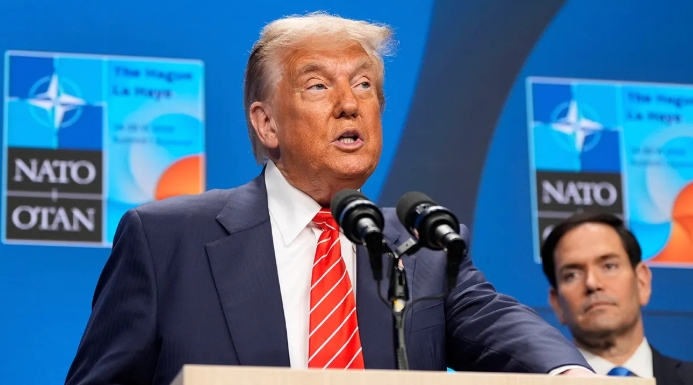
At the same time, Trump has intensified criticism of NATO allies, accusing European countries of failing to support the U.S. military campaign.
He has gone as far as suggesting that the United States could withdraw from NATO, a move that would fundamentally reshape the post-World War II security order.
European resistance to the war has become increasingly visible. Several countries including France, Italy and Spain have reportedly restricted U.S. military access and refused to participate in operations against Iran.
Trump’s remarks, including telling allies to “get your own oil,” have further strained transatlantic relations and raised concerns about a long-term breakdown in Western unity.
Strait of Hormuz Crisis Drives Global Energy Shock
At the center of the escalating economic fallout is the closure of the Strait of Hormuz, one of the world’s most critical oil shipping routes.
The disruption has triggered what analysts describe as the largest global oil supply shock in modern history, with ripple effects across energy markets, inflation and global trade.
Fuel shortages have already been reported across parts of Asia and Europe, with jet fuel and diesel supplies particularly affected.
Oil prices surged above $100 per barrel in recent days before dipping slightly after Trump’s comments about a potential withdrawal raised hopes of de-escalation.
Still, economists warn the crisis could have long-term consequences, including recession risks and renewed dependence on fossil fuels in some regions.
Markets React to De-escalation Signals
Global financial markets responded cautiously to Trump’s remarks. U.S. stock indexes rose, while oil prices briefly declined amid expectations that reduced military activity could stabilize supply chains.
However, volatility remains high, with analysts warning that any renewed escalation particularly around key oil infrastructure could quickly reverse gains.
Uncertain Path Forward
While Trump has framed the war as nearing completion, key issues remain unresolved, particularly the reopening of the Strait of Hormuz and the broader political future of Iran.
Critics argue that the administration lacks a coherent long-term strategy, warning that a premature withdrawal could leave a power vacuum and prolong instability in the region.
Meanwhile, tensions between the U.S. and its allies and the growing global energy crisis underscore the far-reaching consequences of a conflict that has rapidly evolved from a regional war into a worldwide economic and geopolitical shock.
Get the latest news of our Loveworld News from our Johannesburg Stations and News Station South Africa, LN24 International
Related Posts
Some description text for this item