

Image: ln24SA
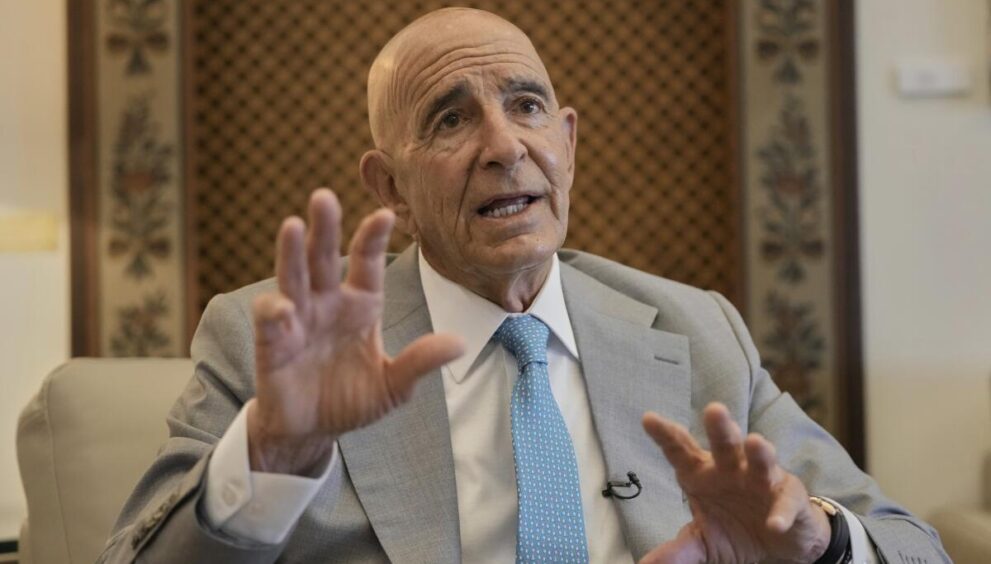
A U.S. representative has called on Syria’s leader, Ahmed al-Sharaa, to adjust his policies and adopt a more inclusive approach following recent sectarian violence, warning that failure to do so could lead to loss of international support and further division within the country.
In private talks, the envoy recommended that Sharaa reconsider aspects of the pre-conflict military setup, reduce Islamist influence within his forces, and seek help from regional security partners.
Speaking from Beirut, the envoy emphasized that without prompt reforms, Sharaa risks losing the momentum that helped him rise to power. He encouraged Sharaa to quickly adapt, suggesting that continuing with ineffective strategies would only weaken his position.
Sharaa, who once led a group linked to extremist factions, came to power after overthrowing the previous government following over a decade of civil war. Despite his roots in militant Sunni groups, he has pledged to protect Syria’s diverse minority communities. However, recent mass killings of members from various sects have put that promise to the test.
Violent clashes in the southern province of Sweida have resulted in hundreds of deaths among Druze fighters, Sunni tribes, and Sharaa’s forces. In response, a neighbouring country launched airstrikes to prevent what it described as a potential massacre of the Druze population.
The envoy urged the new government to more rapidly include minority groups in leadership roles but also disputed claims that Syrian forces were behind abuses against Druze civilians, suggesting extremist fighters might have disguised themselves as government troops and warning that social media footage can be misleading.
He clarified that Syrian troops had agreed with the neighbouring country not to enter certain areas, indicating they were not responsible for recent atrocities there.
Following a ceasefire agreement brokered last week, the envoy highlighted the precarious situation in Syria, noting that there is no clear alternative leadership if the current regime collapses, and warning that efforts may be underway to provoke such a failure.
He acknowledged the risk that Syria could experience chaos similar to that seen in other conflict zones, or even worse.
The U.S. has distanced itself from the neighbouring country’s airstrikes, describing them as adding to the confusion. The neighbouring country views Syria’s new rulers as dangerous militants and has pledged to protect minority communities in contested regions, encouraged by its own minority population’s concerns.
The envoy suggested dialogue between the neighbouring country and Syria’s new leadership to ease tensions and expressed willingness for the U.S. to mediate honestly between the parties.
He noted that Sharaa has indicated from the outset that he does not consider the neighbouring country an enemy and could eventually establish normalised relations.
Finally, the envoy emphasised that the international community is not imposing a particular political system on Syria, only advocating for stability, unity, fairness, and inclusiveness, recognising that the country’s future governance structure is ultimately a domestic decision requiring adaptation by all.
Get the latests of our Loveworld News from our Johannesburg Stations and News Station South Africa, LN24 International