

Image: ln24SA
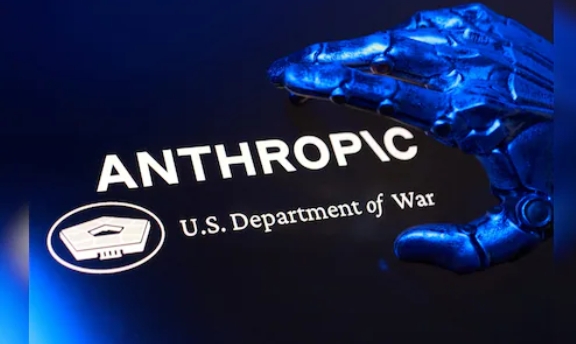
In Washington, D.C. Anthropic, the artificial intelligence company behind the Claude AI model, has asked a U.S. federal appeals court to temporarily block a controversial Pentagon designation that labels the firm a “supply‑chain risk”, a move that threatens to cut off the company from lucrative defense contracts and widen a growing dispute between the tech industry and the U.S. government.
The request for a stay filed on Wednesday with the U.S. Court of Appeals for the District of Columbia Circuit seeks to halt enforcement of the designation while legal challenges unfold, arguing that the Pentagon exceeded its authority and undermined standard federal procedures.
Unprecedented Pentagon Move
The dispute began in late February when the U.S. Department of Defense formally classified Anthropic as a supply‑chain threat, effectively barring defense contractors and certain government agencies from using the company’s AI tools, including its widely used Claude models.
Supply‑chain risk designations are typically reserved for foreign adversaries and entities with clear ties to hostile governments. Officials say the tool is designed to protect national security from sabotage or compromise. But using it against a U.S. based AI firm marked a highly unusual escalation in government oversight of advanced technology providers.
Legal Arguments and Industry Backing
In its filings, Anthropic’s legal team contends that the designation was “unlawful” and “arbitrary,” claiming it punishes the company for refusing to eliminate safeguards that restrict how its AI can be used specifically policies related to mass domestic surveillance and fully autonomous weapon systems.
“The Constitution does not allow the government to wield its enormous power to punish a company for its protected speech,” the company said in one of its lawsuits challenging the Pentagon’s action in federal court.
The legal fight has drawn attention from major tech players. Microsoft, a partner of Anthropic, filed its own motion supporting a stay of the designation, arguing it should continue to be able to use and integrate Claude in non‑defense contexts while the dispute is litigated.
Economic and Industry Impacts
The Pentagon’s designation has already had financial fallout for Anthropic. Defense contracts that once comprised a significant portion of the company’s projected revenue are now in jeopardy, and some private partners have paused negotiations amid legal uncertainty.
Industry analysts warn that a sustained ban could set a dangerous precedent for how the U.S. government interacts with domestic tech companies, particularly those developing cutting‑edge AI systems that are increasingly integrated into national security operations.
Next Legal Steps
If granted, the stay would temporarily prevent the Pentagon’s designation from being enforced, giving Anthropic breathing room as courts assess the broader legality of the government’s actions. Legal experts say the case could wind its way through multiple levels of the federal judiciary before a final determination is made.
The stakes extend beyond Anthropic, with implications for other AI firms navigating the delicate balance between innovation, ethical safeguards and government requirements.
Get the latests of our Loveworld News from our Johannesburg Stations and News Station South Africa, LN24 International
Related Posts
Some description text for this item