

Image: Healing Streams
The ongoing war between the United States and Iran has entered a more dangerous phase, with Tehran launching fresh attacks on U.S. allies in the Gulf including the United Arab Emirates, Saudi Arabia, Bahrain and Kuwait even as President Donald Trump claimed these retaliatory strikes “were not expected.”
The renewed offensive underscores how the conflict, now in its third week, has escalated far beyond initial projections, drawing in nations across the Gulf region and threatening to widen a war that has disrupted global energy markets and upended regional geopolitics.
Iranian Retaliation Across the Gulf
Iran’s forces have used drones, missiles and rocket barrages to target military infrastructure, oil facilities and U.S. allied installations across Gulf states. The attacks have forced temporary airspace closures and triggered defensive responses from Gulf air defenses.
For example:
- A strike on an oil storage facility in Fujairah, UAE, briefly closed the country’s airspace and triggered emergency responses.
- Saudi Arabian air defenses intercepted Iranian drones and cruise missiles over Riyadh and the Eastern Province.
- Kuwait and Bahrain have reported missiles and drones intercepted near populated areas and military positions.
Energy infrastructure including oil refineries and transport hubs has been repeatedly targeted, exacerbating global fuel price volatility and stoking fears of a prolonged fuel supply shock.
Trump Claims Retaliation “Unexpected”
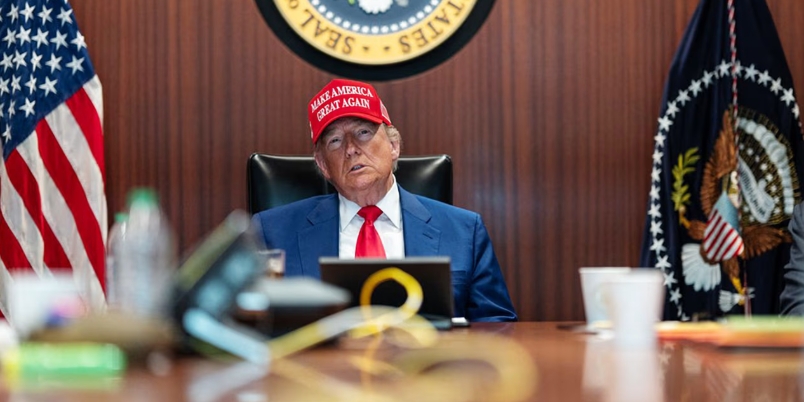
President Trump doubled down on public statements asserting that Iran’s strategic escalation against U.S. partners was unforeseen.
“This was not something we expected,” Trump told reporters during a public appearance, underscoring his surprise at the breadth and intensity of Tehran’s strikes across allied nations.
However, U.S. intelligence sources and officials familiar with classified briefings have indicated that Trump was warned ahead of time that Iranian retaliation against allied nations was one of the possible outcomes of U.S. and Israeli military strikes on Iranian targets.
Officials say Tehran’s strategy was never dismissed in intelligence assessments even if the administration publicly projected confidence highlighting a stark disconnect between internal warnings and public messaging.
Regional and Global Implications
Energy Markets and the Strait of Hormuz
Global oil prices remain sharply elevated as Iran’s attacks disrupt shipments through the strategic Strait of Hormuz a conduit for roughly one‑fifth of the world’s oil. Tehran has repeatedly threatened to close the Strait to “enemy” vessels, further pressuring markets already reeling from conflict‑driven supply shocks.
Diplomatic Strain with Allies
Trump’s appeal for allied naval support to reopen and protect shipping lanes has met resistance from key partners in Europe and Asia, leaving Washington scrambling to build a credible multinational maritime security coalition.
Some Gulf states have expressed frustration at being left exposed, arguing that they were not sufficiently warned or defended against Iranian attacks deepening rifts within the U.S.–Gulf security relationship.
Wider Military Escalation
Beyond the Gulf, Iran’s missile and drone campaign has extended to Israel and Lebanon, with cross‑border strikes triggering swift Israeli reprisals in cities including Beirut and Tehran.
U.S. and allied strikes on Iranian energy and military infrastructure such as raids on oil export hubs have further hardened Tehran’s resolve, making de‑escalation talks increasingly elusive.
What Comes Next?
The conflict shows few signs of abating. With Iran’s leadership consolidating power and its armed forces continuing sustained operations, analysts warn that:
- Regional escalation could draw in further Middle Eastern and global actors.
- Global energy markets may stay volatile amid threats to shipping lanes.
- Diplomatic fractures between the U.S. and its allies could deepen if security commitments are perceived as uneven.
Experts say that the next few days will be critical, as Washington weighs additional military options while attempting urgent diplomacy to prevent further spiraling of the confrontation.
Get the latests of our Loveworld News from our Johannesburg Stations and News Station South Africa, LN24 International
Related Posts
Some description text for this item