

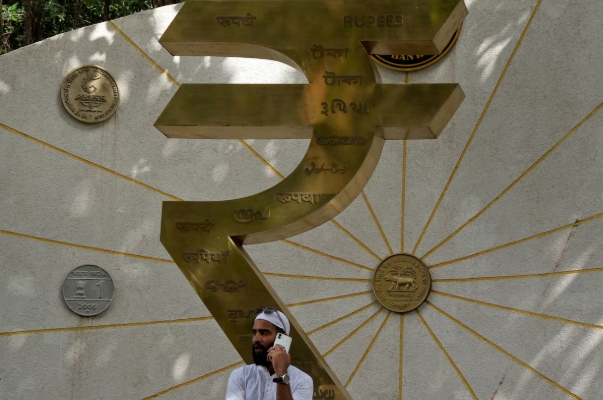
Image: Healing Streams
Indian currency markets are witnessing a sharp surge in activity as traders and investors increasingly turn to options contracts to hedge against or profit from expected weakness in the Indian rupee (INR). The spike in activity has been driven by the recent global oil price shock and heightened geopolitical uncertainty, which have fueled short‑term bearish sentiment toward the currency.
The notional value of dollar‑rupee options traded on U.S. exchanges in the first two weeks of March reached about $18.5 billion, nearly approaching the monthly totals of $24 billion–$25 billion recorded in prior months despite the period being shorter.
Oil Prices, Geopolitics and Pressure on the Rupee
The catalyst for the recent surge in options trading has been the oil price shock triggered by escalating conflict in the Middle East, particularly the ongoing war involving Iran, which has pushed crude prices sharply higher. Higher energy costs are particularly acute for India, as the country imports a large majority of its oil.
The heightened crude price environment has worsened India’s trade balance and stoked inflationary pressure, increasing demand for foreign currency to pay for imports and exerting downward pressure on the rupee. Economists warn that sustained elevated oil prices could widen India’s current account deficit and dampen GDP growth.
Surge in Bearish Option Positions
Market data shows that recent options flows have been heavily skewed toward short‑term bearish bets on the rupee trades that gain if the INR depreciates against the U.S. dollar. Traders and hedgers are purchasing put options and other structures that benefit from a weaker rupee, reflecting expectations that the currency will remain under pressure in the near future due to persistent external shocks.
This trend is consistent with broader risk‑off positioning in Indian financial markets, where foreign portfolio investors have been reducing equity exposure and increasing defensive derivatives plays amid volatility. Recent FPI outflows from Indian equities have surpassed ₹50,000 crore in early March, highlighting investor caution.
Impact on Markets and the Broader Economy
The rupee has been trading close to historic lows at around 92.4 against the U.S. dollar, levels not seen before, as currency markets grapple with oil‑linked inflationary pressures and capital outflows. While modest rallies have occurred, overall volatility remains elevated.
Alongside currency markets, India’s stock markets have also reflected investor anxiety. Broad indices have shown bouts of selling pressure, though occasional rallies have surfaced as traders trim extreme bearish bets.
Corporate India is also feeling the strain: companies with foreign exchange exposure are reassessing hedging strategies as traditional hedges lose effectiveness amid rising volatility, prompting a shift toward forward contracts and other risk management tools.
RBI and Policy Considerations
The Reserve Bank of India (RBI) has been closely monitoring the situation, with signs of intervention to support market stability in currency and bond markets. Central bank actions including forex market activity and macroprudential measures are aimed at moderating excessive volatility while balancing broader economic objectives.
Economists emphasize that the rupee’s trajectory will remain linked to global oil prices, trade‑off dynamics in inflation and growth forecasts, and evolving foreign investor sentiment. Continued geopolitical uncertainties and energy price risks are likely to keep market positioning tilted toward caution in the near term.
Outlook
With crude oil prices remaining elevated and geopolitical tensions unresolved, the Indian rupee is expected to face continued pressure, keeping rupee options trading elevated as investors hedge and speculate on further currency weakening. The surge in short‑term bearish bets underscores market expectations that volatility could persist until some clarity emerges on global energy markets and geopolitical developments.
Get the latests of our Loveworld News from our Johannesburg Stations and News Station South Africa, LN24 International
Related Posts
Some description text for this item