

Image: Healing Streams
U.S. President Donald Trump has sharply criticized NATO allies for refusing to participate in the ongoing U.S.-Israel military campaign against Iran, calling their position a “very foolish mistake” as tensions in the Middle East continue to escalate.
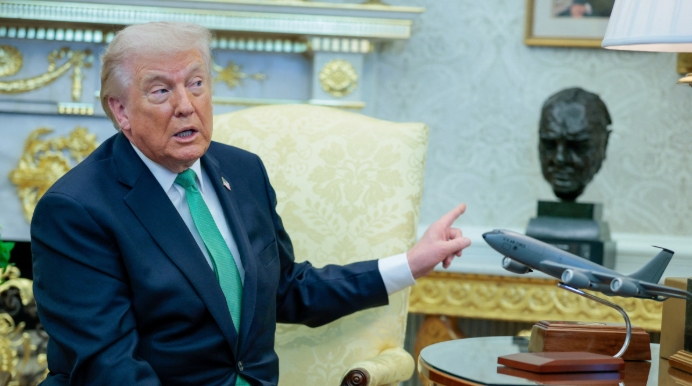
Speaking from the Oval Office during a meeting with Micheál Martin, Trump expressed frustration that key NATO members declined to assist in securing the strategically vital Strait of Hormuz, a critical global oil shipping route.
Growing rift between Washington and NATO
Trump’s remarks highlight a widening divide between Washington and its traditional allies. While many NATO countries have expressed political support for the United States, they have stopped short of committing military resources to the conflict.
“They agree with us, but they don’t want to help,” Trump said, emphasizing what he described as an imbalance in burden-sharing within the alliance.
Despite his criticism, Trump indicated he has no immediate plans to retaliate against NATO members, though he warned the alliance could face a “very bad future” if such lack of cooperation continues.
Strait of Hormuz at the center of crisis
The dispute comes as Iran has intensified activity in the Strait of Hormuz, disrupting tanker traffic through a passage that carries a significant share of the world’s oil supply.
Tehran has reportedly deployed drones, missiles and naval mines in response to U.S. and Israeli strikes, raising fears of a broader regional war and pushing global energy prices higher.
Washington has urged allies to contribute naval forces particularly minesweepers and escort vessels to secure the waterway. However, major European powers have resisted involvement, arguing that the crisis requires a diplomatic rather than military solution.
Allies resist deeper military involvement
European leaders have continued to distance themselves from the conflict, with some warning against escalation or attempts at regime change in Iran.
The United Kingdom has also declined to join direct military operations, stating it will focus on protecting its own interests and citizens.
Beyond Europe, countries such as Japan, Australia and South Korea have similarly refrained from committing forces, further isolating the U.S. position.
Trump: U.S. may not need NATO support
In a series of statements, Trump has sent mixed signals criticizing NATO while also asserting that U.S. military progress means Washington may not require allied support.
“We no longer need NATO’s help,” Trump said, pointing to ongoing operations against Iranian targets.
Analysts say the comments reflect deeper strategic tensions within the alliance, particularly over burden-sharing and the legitimacy of the current military campaign.
Wider conflict and global implications
The crisis has already had significant regional and global consequences. Missile and drone attacks have been reported across the Gulf, while violence has spread to areas such as Baghdad, including incidents near the U.S. embassy.
Casualties are mounting across multiple fronts, and disruptions to oil supplies have raised concerns about inflation and broader economic instability worldwide.
Meanwhile, political fallout is also growing within the United States, with critics questioning the justification and long-term strategy behind the war.
An uncertain future
As the conflict enters its third week, the lack of NATO unity underscores the challenges facing U.S. diplomacy and military strategy. While Trump insists the campaign is progressing successfully, allies remain wary of deeper involvement in what many see as a widening and unpredictable conflict.
With the Strait of Hormuz still contested and no clear diplomatic breakthrough in sight, the crisis threatens to reshape not only Middle Eastern geopolitics but also the future of transatlantic relations.
Get the latests of our Loveworld News from our Johannesburg Stations and News Station South Africa, LN24 International
Related Posts
Some description text for this item