

Image: ln24SA
Representatives from the United States and Europe have gathered in Paris to work on resolving a contentious tariff dispute that has significant implications for the global economy.
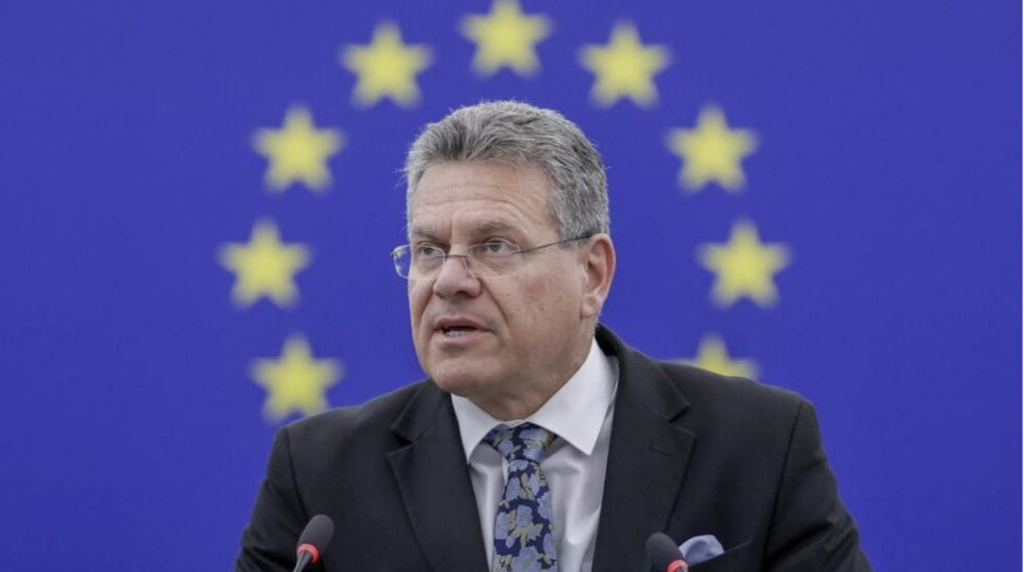
The lead trade negotiator for the European Union, Maroš Šefčovič, held talks with the U.S. Trade Representative Jamieson Greer on the sidelines of an international economic meeting. Šefčovič expressed optimism about the progress being made and noted that further technical discussions are planned in Washington, followed by a video call to evaluate progress and plan next steps.
Despite these efforts, a major breakthrough in Paris is unlikely as the issues at hand are complex and not easily settled. The U.S. administration has repeatedly criticized the sizable trade deficit with Europe, which reached $161 billion last year. The American side attributes this gap to unfair trade practices, particularly targeting the EU’s 10% tariff on imported cars. In contrast, U.S. tariffs on European vehicles were recently raised to 25%. Meanwhile, the EU points to its substantial purchases of American services, especially in technology, as balancing the deficit.
Recent unexpected tariffs imposed by the U.S. on steel have unsettled global markets and complicated ongoing talks. In response, the EU announced plans to prepare retaliatory measures. The EU has proposed a “zero-for-zero” deal, where both sides would remove tariffs on industrial goods, including automobiles. Although the U.S. has rejected this proposal, it remains a subject of discussion.
Europe might increase purchases of U.S. liquefied natural gas and defense products and could consider lowering tariffs on cars, but it remains firm on maintaining its value-added tax (VAT) and protecting its agricultural regulations.
French Trade Minister Laurent Saint-Martin remarked that there is still time to negotiate, but if talks fail, Europe is prepared to implement countermeasures against American goods and services.
Experts note that the zero-for-zero offer could serve as a practical path forward if the U.S. is willing to avoid escalating tariffs. However, skepticism remains about the U.S. commitment to reaching an agreement, given long-standing complaints about European trade policies.
A key point of contention is the EU’s VAT, which some in the U.S. view as a hidden trade barrier since it applies to American products. However, VAT is applied uniformly to both domestic and imported goods at the national level, making it unlikely that either side will change their tax structures for this dispute.
Similarly, European resistance is expected against U.S. demands to eliminate food safety and environmental regulations seen by Washington as trade obstacles, such as bans on hormone-treated beef, chlorinated chicken, and genetically modified foods.
These differences highlight deep-rooted disagreements about how countries regulate their economies and protect public health, a tension that has persisted for decades.
Get the latests of our Loveworld News from our Johannesburg Stations and News Station South Africa, LN24 International